 admin
admin China’s Unmissable Scenic Tourist Spots: Your Ultimate Travel Guide
Planning a trip to China can feel overwhelming. With a landmass so vast and a history spanning millennia, how do you even begin to choose where to go? You’re searching for those iconic, breathtaking places that define China’s landscape and culture—the spots that are truly worth the journey. This guide cuts through the noise to bring you the most spectacular and essential scenic tourist spots in China. We’ll navigate from the ancient wonders carved by history to the dramatic landscapes shaped by nature, ensuring your itinerary captures the soul of this incredible country.
The challenge isn’t finding destinations; it’s prioritizing them. This article, focused on China’s most scenic tourist spots, is built on thorough research and authoritative travel insights. We’ve structured it to help you plan efficiently, blending must-see landmarks with practical advice for an authentic and seamless experience.
The Imperial Grandeur and Ancient Wonders
No visit to China is complete without witnessing its historical crown jewels. These sites offer more than just scenery; they are a direct dialogue with the past.
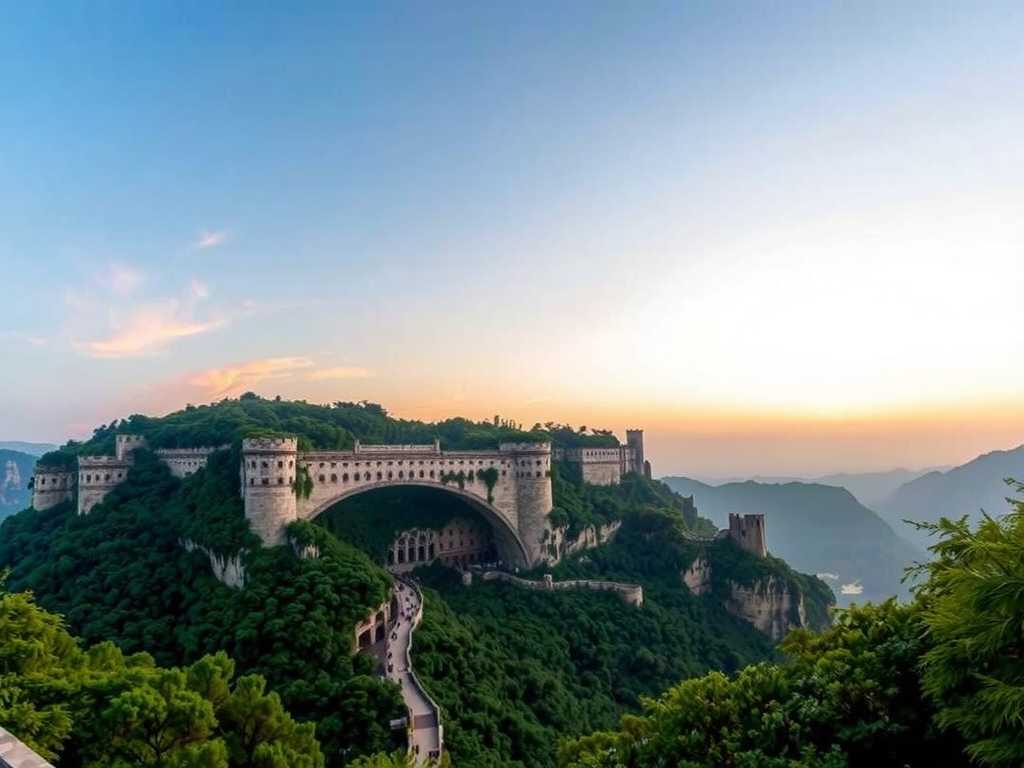
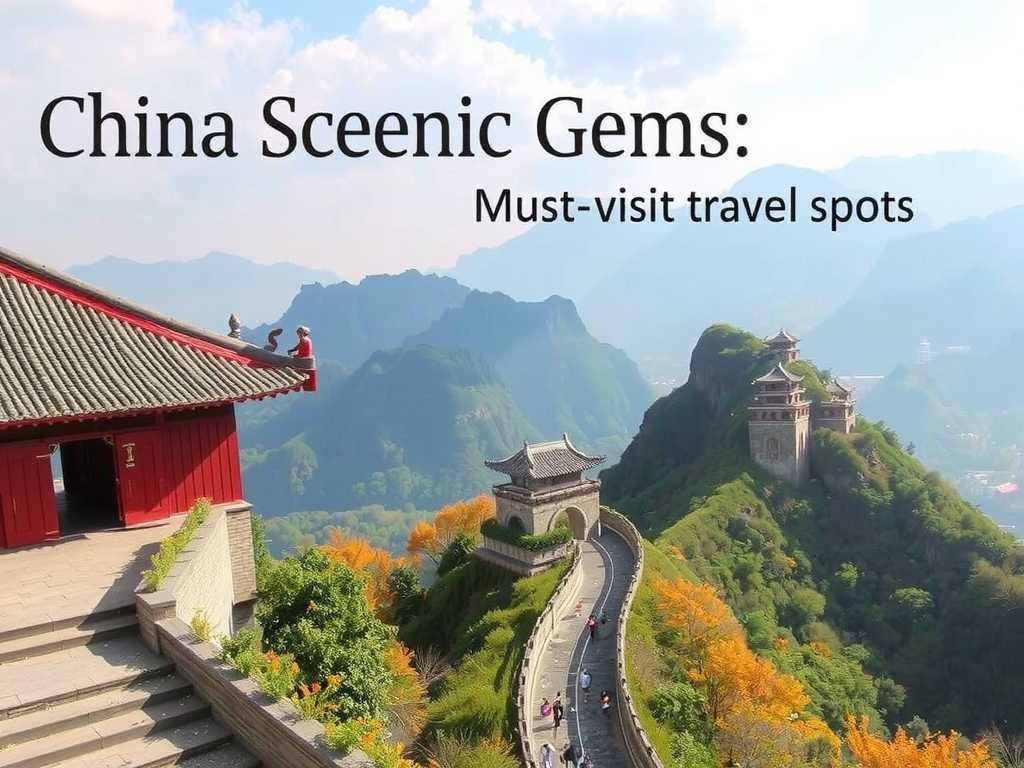
The Great Wall: A Serpentine Marvel Across Mountains Stretching over 13,000 miles, the Great Wall is the definitive symbol of China. Forget the idea of a single, easily accessible wall. For the most scenic and impactful experience, head to the Mutianyu or Jinshanling sections. Mutianyu offers a stunning blend of restored grandeur and wild, photogenic watchtowers snaking over forested peaks. It’s less crowded than Badaling and features a thrilling toboggan ride down. For hikers, Jinshanling provides a more rugged, authentic atmosphere with breathtaking views. As historian and author William Lindesay notes, “The Wall is not just a line of bricks; it’s a landscape feature, following the most dramatic ridges nature provided.” Visit at sunrise to see the wall awaken, draped in mist and golden light.
The Forbidden City & Temple of Heaven: Beijing’s Architectural Symphony In the heart of Beijing lies the Forbidden City, the world’s largest imperial palace complex. Its scenic beauty lies in the harmonious geometry, the vast courtyards of stone, and the sudden bursts of color from ornate rooftops against the deep red walls. It’s a lesson in scale and power. A short distance away, the Temple of Heaven presents a different aesthetic. Its circular Hall of Prayer for Good Harvests, set within a vast park of ancient cypress trees, is an architectural masterpiece. Come early morning to see locals practicing tai chi, adding a living cultural layer to the serene scenery.
The Terracotta Army: An Underground Empire in Xi’an Discovered in 1974, this army of over 8,000 life-sized soldiers, horses, and chariots is one of the greatest archaeological finds of the 20th century. The sheer scale is the scenery here—rank upon rank of uniquely detailed figures frozen in time, guarding the tomb of China’s first emperor, Qin Shi Huang. Viewing the main excavation pit is a humbling experience that transcends typical tourism. For context, leading archaeologist Dr. Zhang Weixing emphasizes, “The level of individual craftsmanship suggests a highly organized society with incredible artistic resources dedicated to the afterlife.”
Nature’s Masterpiece: Landscapes That Defy Imagination
China’s physical geography creates scenes so dramatic they look like brush paintings come to life.
Zhangjiajie National Forest Park: The Avatar Mountains The towering sandstone pillars of Zhangjiajie in Hunan province seem to defy gravity. Shrouded in mist, these quartzite columns, some over 1,000 meters tall, inspired the floating “Hallelujah Mountains” in the film Avatar. Explore the park via its dizzying glass-bottomed walkways, the Bailong Elevator built into a cliff face, and tranquil trails at the base of the pillars. The combination of eerie rock formations, lush greenery, and ever-shifting clouds creates a genuinely otherworldly scenic spot.
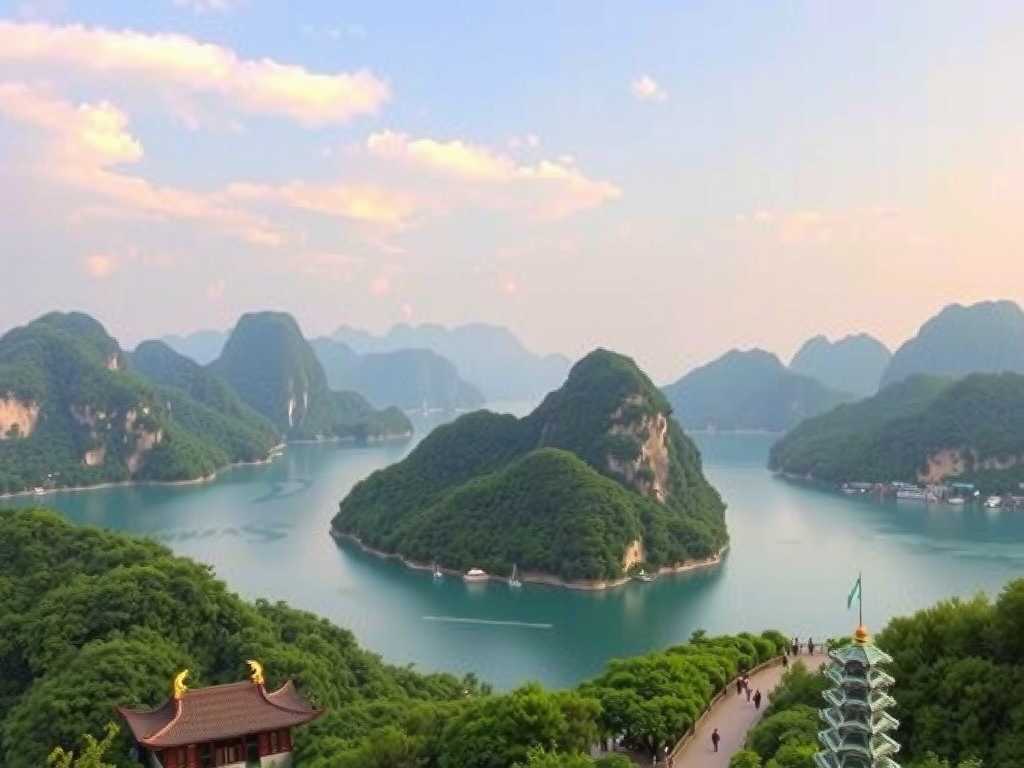
The Li River & Yangshuo: A Poetic Journey The classic Chinese landscape painting is real, and its name is the Li River. A cruise from Guilin to Yangshuo is a journey through a dreamscape of karst peaks, bamboo groves, and water buffalo grazing by the riverbanks. The scenery is gentle, poetic, and profoundly peaceful. Disembark in Yangshuo to cycle through rice paddies with those iconic peaks as your backdrop or take a bamboo raft down the quieter Yulong River. It’s the quintessential rural China scenic experience.
Jiuzhaigou Valley: A Fairyland of Colorful Lakes Located in Sichuan province, Jiuzhaigou is a UNESCO site famed for its multi-colored lakes, cascading waterfalls, and snow-capped peaks. The water is so clear and mineral-rich that it reflects stunning shades of turquoise, emerald, and sapphire. Walking the boardwalks through this alpine valley feels like stepping into a perfectly preserved natural wonderland. Each season offers a different spectacle, from spring blossoms to autumn’s fiery foliage mirrored in the pristine waters.
The Yellow Mountains (Huangshan): The Classic Summit Huangshan is the epitome of China’s mountain scenery. Its four wonders—“strangely shaped pines,” “spectacular rock formations,” “sea of clouds,” and “hot springs”—have been celebrated in art and literature for centuries. Hiking its paths, you’ll understand why. The granite peaks pierce through rolling clouds, and ancient, gnarled pine trees cling to the cliffs. Stay overnight at a summit hotel to witness a sunrise that is nothing short of spiritual, painting the rocky spires in gold and pink.
Cultural and Scenic Fusion: Unique Regional Experiences
Some of China’s most scenic spots are inseparable from the living cultures that inhabit them.
The Yuanyang Rice Terraces: A Sculpted Landscape In Yunnan province, the Hani people have, over 1,300 years, carved a masterpiece of agricultural engineering into the Ailao Mountains. The Yuanyang terraces are a vast, shimmering mosaic of thousands of water-filled paddies that reflect the sky. At sunrise and sunset, the light transforms the slopes into a canvas of gold, pink, and blue. This is a dynamic scenic spot, changing with the seasons from flooded mirrors to green ripples to golden harvest hues.
The Potala Palace & Himalayan Vistas of Tibet Perched atop Marpo Ri hill in Lhasa, the majestic Potala Palace is not just an architectural wonder but the spiritual heart of Tibetan Buddhism. Its towering white and maroon walls against the deep blue Himalayan sky create an awe-inspiring image. The scenery here is one of profound altitude and spirituality. The journey itself, across the “roof of the world,” offers vistas of vast plateaus, turquoise lakes, and towering peaks, including distant views of Mount Everest from certain routes.
The Water Towns of the Yangtze Delta For a softer, lyrical side of China, visit the ancient water towns like Zhouzhuang, Xitang, or Wuzhen. Often called the “Venice of the East,” these towns feature networks of canals, stone bridges, and whitewashed houses with black-tiled roofs. Glide through the waterways on a wooden boat, explore Ming and Qing dynasty architecture, and experience a slower pace of life. The scenic charm is in the tranquil reflections on the water and the well-preserved glimpse into China’s canal-based commerce and culture.
What is the best time of year to visit China for scenery? Spring (April-May) and Autumn (September-October) are generally ideal. These seasons offer mild temperatures, clear skies, and natural beauty—spring blossoms or autumn foliage. However, specific spots have unique appeals: Jiuzhaigou is stunning in autumn, the rice terraces are best from November to April when flooded, and Huangshan’s sea of clouds is more frequent in winter.
Are these scenic spots too crowded with tourists? Popular sites like the Great Wall (Badaling section) and the Forbidden City can be very busy, especially during national holidays. The key is strategy: visit on weekdays, arrive right at opening time, and choose alternative sections (like Mutianyu for the Wall). Destinations like Zhangjiajie or the Yuanyang Terraces, while popular, absorb crowds better due to their vast scale.
How can I travel between these diverse locations efficiently? China’s high-speed rail network is fast, reliable, and connects most major cities near these scenic areas (e.g., Beijing, Xi’an, Guilin, Shanghai). For remote regions like Jiuzhaigou or Tibet, domestic flights are necessary. Always book train and flight tickets in advance, especially during peak travel seasons.
From the man-made majesty of the Great Wall to the natural fantasy of Zhangjiajie, and from the cultural tapestry of the rice terraces to the serene beauty of the Li River, China’s scenic tourist spots offer a journey through unparalleled diversity. This guide provides a roadmap to these iconic experiences, empowering you to craft a trip that captures both the monumental scale and the delicate beauty of the country. By planning thoughtfully and venturing beyond just the major cities, you’ll discover a China that is endlessly visually rewarding and rich in depth. Your adventure into the world’s most captivating landscapes awaits.

发表评论