 admin
admin China’s Most Iconic Scenic Tourist Sites: Your Ultimate Travel Guide
Planning a trip to China can feel overwhelming. With a vast territory spanning thousands of miles and a history stretching back millennia, how do you choose which destinations are truly unmissable? Many travelers struggle to move beyond the well-trodden path of a few major cities, fearing they might miss the soul-stirring landscapes and profound cultural experiences that define this ancient land. This guide cuts through the noise to bring you the most iconic scenic tourist sites in China, offering not just a list, but a curated journey through natural wonders and human heritage that have captivated visitors for centuries.
Navigating China’s Geographical and Cultural Tapestry
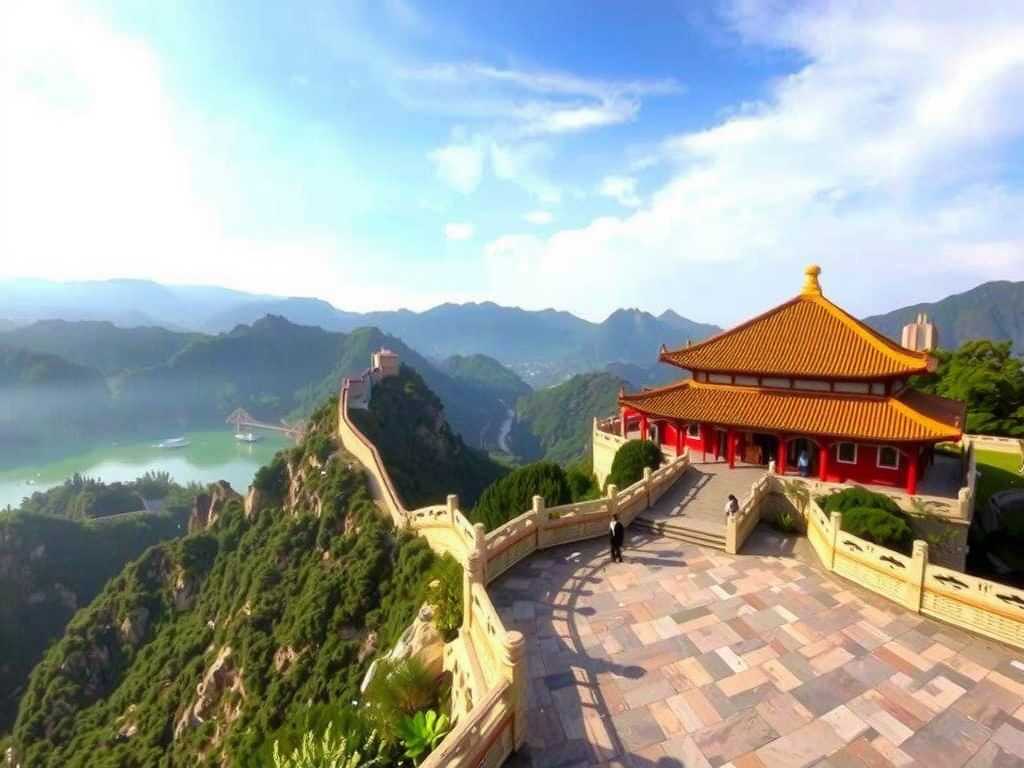
To truly appreciate China’s iconic sites, it helps to understand the country’s layout. China’s scenic splendors are often categorized by region, each with a distinct character. The eastern part boasts classical gardens and water towns, the north is home to imperial grandeur and starkly beautiful landscapes, the southwest offers dramatic karst mountains and ethnic diversity, while the west and northwest present awe-inspiring deserts, high-altitude lakes, and Tibetan culture. This geographical diversity means your journey can be tailored from serene and cultural to adventurous and rugged.
The Great Wall: More Than Just a Wall
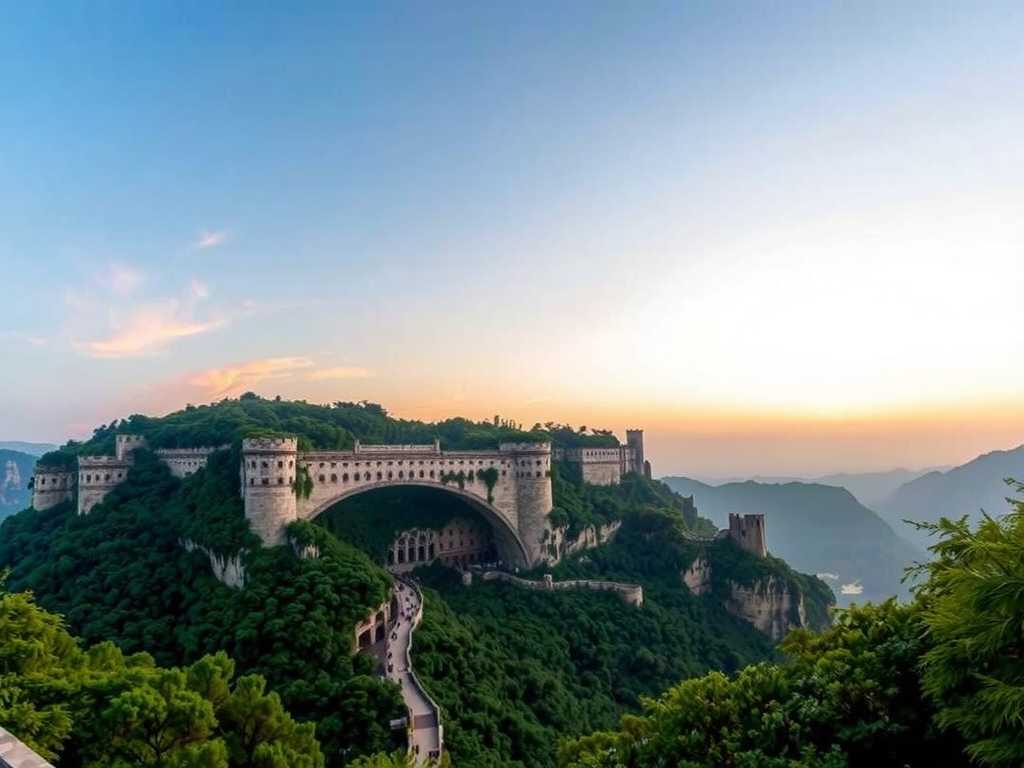
No list of China’s iconic sites is complete without the Great Wall. Stretching over 21,000 kilometers, it is a testament to human perseverance and strategic military history. However, visiting "the Wall" requires careful choice, as sections vary dramatically.
- Mutianyu for Accessibility and Beauty: Perfect for most travelers, Mutianyu offers a well-restored section with stunning views of wall snaking over forested ridges. The availability of a cable car and a thrilling toboggan ride down makes it family-friendly. It’s less crowded than Badaling, providing a more balanced experience of grandeur and relative peace.
- Jiankou for Adventure Photographers: For the intrepid, the wild, unrestored Jiankou section presents a challenging hike with some of the most photogenic, crumbling watchtowers against a backdrop of steep cliffs. This is for experienced hikers seeking raw, unfiltered history.
- Why It’s Iconic: Beyond its scale, the Great Wall embodies a powerful narrative. As noted by historian William Lindesay, it represents a “border of consciousness,” a physical manifestation of ancient China’s desire to define and protect its civilization. Walking its ramparts is a direct connection to that past.
The Forbidden City & Temple of Heaven: The Heart of Imperial China
In Beijing, the imperial legacy is preserved in monumental architecture. The Forbidden City, a UNESCO World Heritage site with over 980 surviving buildings, was the ceremonial and political center for Ming and Qing emperors for nearly 500 years. Its strict axial layout, color symbolism (yellow roofs for the emperor, red walls), and intricate details speak volumes about Chinese cosmology and absolute power. A short distance away, the Temple of Heaven, where emperors performed solemn rituals for good harvests, showcases perfect architectural harmony. Its Hall of Prayer for Good Harvests, a triple-gabled circular building on a triple marble terrace, is an instantly recognizable symbol of Beijing.
The Terracotta Army: An Underground Empire
Discovered by farmers in 1974 near Xi’an, the Terracotta Army is one of the 20th century’s greatest archaeological finds. It features thousands of life-sized soldiers, chariots, and horses arranged in battle formation to guard the tomb of China’s first emperor, Qin Shi Huang. Each figure is unique, with distinct facial features, hairstyles, and armor, offering an incredible glimpse into ancient craftsmanship and military organization. Visiting the three vast pits is a humbling experience that brings textbook history to life in a visceral way.
The Li River & Karst Peaks of Guilin and Yangshuo
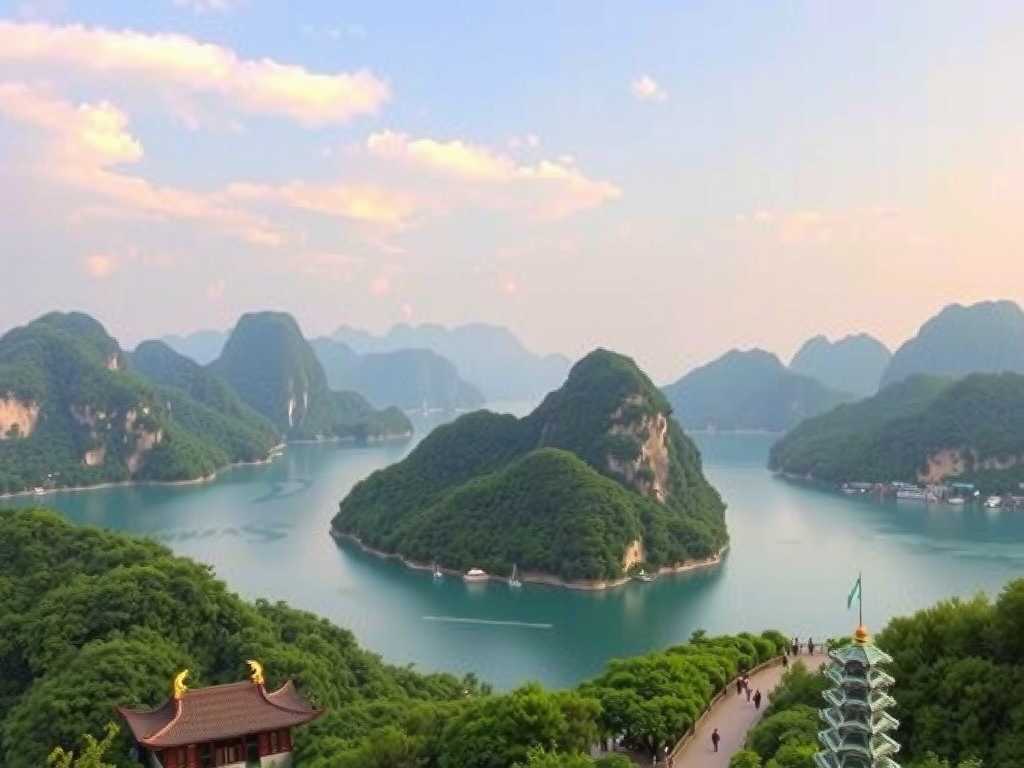
This region in Guangxi province is the picture-postcard image of China’s serene natural beauty. The Li River cruise from Guilin to Yangshuo is a journey through a painting of sheer limestone karst peaks draped in mist, reflected in the gentle green waters. It’s a landscape that has inspired poets and painters for generations. For active immersion, cycling through the rice paddies and small villages around Yangshuo or taking a bamboo raft on the quieter Yulong River allows for a more intimate encounter with this timeless scenery.
The Potala Palace and Himalayan Vistas of Tibet
Perched atop Marpo Ri hill in Lhasa, the Potala Palace is an architectural marvel and the spiritual heart of Tibetan Buddhism. Its towering white and red walls, housing over 1,000 rooms, 10,000 shrines, and 200,000 statues, seem to grow organically from the rock. The journey to Tibet, with its high-altitude lakes like Yamdrok and the base camps of Mount Everest, is as much about the profound cultural atmosphere and breathtaking Himalayan landscapes as it is about the specific sites. It’s a destination that demands respect and preparation but offers unparalleled rewards.
The Misty Huangshan (Yellow Mountain)
Huangshan, or the Yellow Mountains, in Anhui province, is the quintessential Chinese mountain of legend and art. Famous for its granite peaks emerging from a sea of clouds, gnarled pine trees clinging to rocks, and hot springs, Huangshan’s beauty is ethereal and ever-changing. Hiking its trails feels like walking through a classic Chinese ink wash painting. The area also includes well-preserved ancient villages like Hongcun and Xidi, where traditional Huizhou architecture with white walls and black tiles complements the natural majesty.
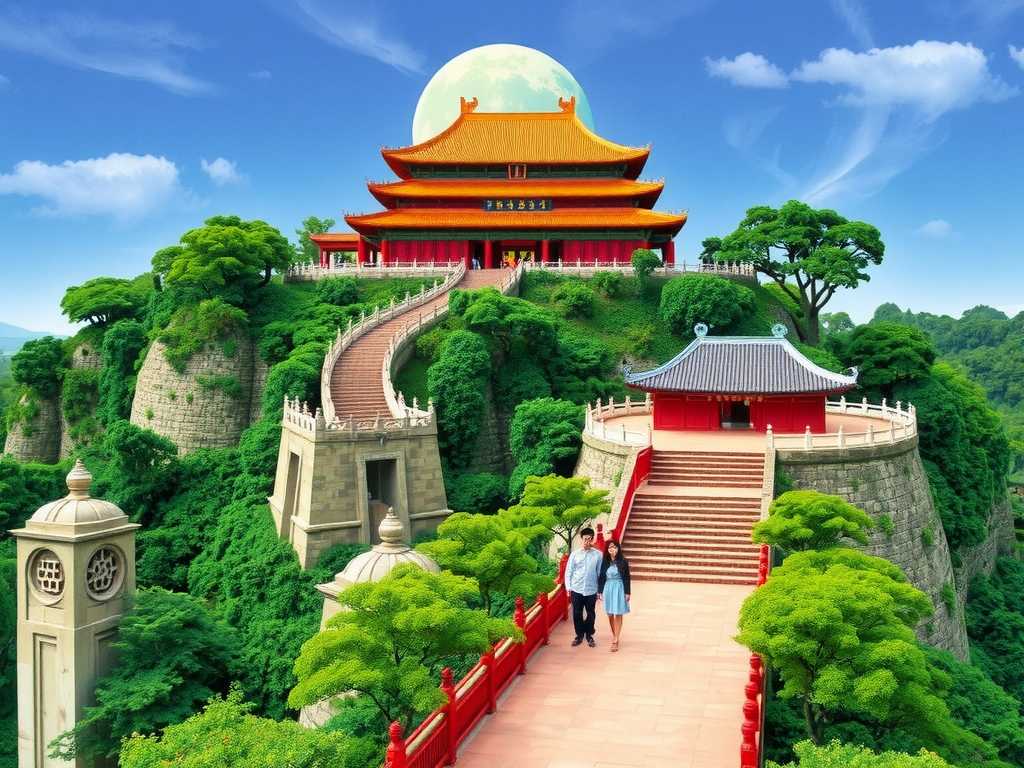
The Pandas of Chengdu and Jiuzhaigou Valley
Sichuan province offers a dual icon experience. The Chengdu Research Base of Giant Panda Breeding provides the most reliable opportunity to see China’s beloved national treasure in a conservation-focused setting. A few hours north lies Jiuzhaigou Valley, a UNESCO site of stunning multi-colored lakes, cascading waterfalls, and snow-capped peaks. The water’s surreal turquoise and azure hues, caused by mineral deposits and algae, create a landscape of almost unbelievable beauty, especially vibrant in autumn.
The Modern Icon: Shanghai’s Skyline
No tour of China’s icons is complete without witnessing its explosive present. Shanghai’s Pudong district skyline, with the Oriental Pearl Tower, the Shanghai Tower, and the Jin Mao Tower, represents China’s 21st-century ambition. A stroll along the historic Bund across the Huangpu River offers the perfect vantage point to contrast colonial-era architecture with this forest of futuristic skyscrapers, beautifully illuminated at night.
How to Plan Your Visit to These Iconic Sites
Successfully visiting these sites requires strategy. Domestic tourism is massive, so timing is crucial. Aim for shoulder seasons (April-May, September-October) to avoid the largest crowds and extreme weather. Book flights and high-speed train tickets well in advance, especially during national holidays. For popular sites like the Forbidden City or the Terracotta Army, secure online tickets the moment they become available (often 7-10 days in advance). Consider hiring local guides at historical sites; their stories and context dramatically enrich the experience. Finally, be prepared for walking—comfortable shoes are your most important packing item.
What is the best time of year to visit China for these scenic sites? Spring (April to May) and autumn (September to October) are generally ideal. These months offer mild temperatures, less rainfall, and beautiful natural scenery, such as blooming flowers in spring or vibrant foliage in autumn. They provide a comfortable climate for exploring both outdoor landscapes and city attractions.
Are these iconic sites suitable for family travel with children? Absolutely, but with planning. Sites like the Mutianyu section of the Great Wall (with cable car), the pandas in Chengdu, and a Li River cruise are very family-friendly. For historical sites like the Forbidden City, consider shorter, focused tours or engaging a guide who can tell captivating stories to keep younger visitors interested. Always prioritize comfort and pace.
How can I manage visiting multiple iconic sites without feeling rushed? Focus on a regional cluster rather than crisscrossing the country. For example, combine Beijing (Great Wall, Forbidden City) with Xi’an (Terracotta Army) via high-speed train. Or pair Shanghai with nearby classical water towns and Hangzhou’s West Lake. Allocating at least 2-3 full days per major city or destination allows for a deeper, more relaxed experience rather than a checklist approach. Quality of experience always trumps quantity of sights.
From the ancient stone serpents of the Great Wall to the futuristic towers of Shanghai, China’s iconic sites offer a journey through time itself. They are places where nature and human achievement converse across centuries, inviting you not just to see, but to feel the enduring spirit of one of the world’s oldest continuous civilizations. With thoughtful planning and an open mind, your visit will move beyond simple tourism to become a truly transformative exploration.


发表评论