 admin
admin Scenic Wonders: China’s Top Tourist Attractions You Must Experience
Planning a trip to China can feel overwhelming. With a landmass rivaling a continent and thousands of years of history, how do you possibly choose where to go? The fear of missing out on truly iconic sights while getting lost in the crowd is real. This guide cuts through the noise, focusing on China’s top tourist attractions that deliver unparalleled scenic wonders and cultural depth. We’ll navigate from ancient man-made marvels to breathtaking natural landscapes, providing clear insights to craft your perfect itinerary.
Navigating China’s Geographic and Cultural Tapestry
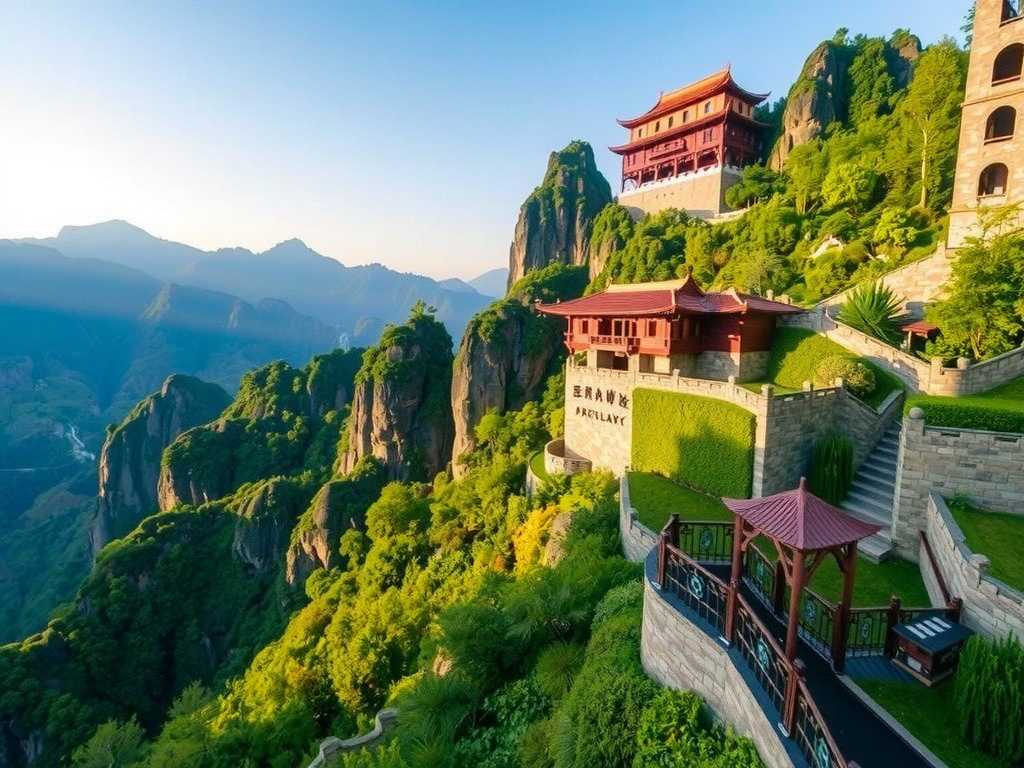
Before diving into specific sites, understanding China’s vastness is key. The country’s attractions are often grouped by region: the historical north around Beijing, the scenic and picturesque south near Guilin and Yangshuo, the ruggedly beautiful Tibetan Plateau in the west, and the modern metropolises of the east like Shanghai. Each area offers a distinct flavor, from imperial grandeur to serene riverine landscapes. According to the China Tourism Academy, over 65% of first-time international visitors prioritize a mix of cultural heritage and natural beauty, a balance perfectly struck by the destinations listed here.
The Great Wall: A Serpentine Marvel Across Mountains
No list of China’s top tourist attractions is complete without the Great Wall. Stretching over 21,000 kilometers, it’s not just a wall but a symbol of perseverance. The misconception is that it’s a single, easily visited structure. In reality, choosing the right section is crucial for your experience.
For iconic, restored views, the Badaling and Mutianyu sections near Beijing are most accessible. Mutianyu, in particular, offers a superb blend of preservation and manageable crowds, with a cable car option and thrilling toboggan ride down. For the adventurous seeking raw, crumbling beauty and solitude, Jiankou or Jinshanling provide breathtaking, photogenic hikes. Travel expert Dr. Li Wen notes, “The Wall’s power lies in its context. Visiting a less-restored segment like Jiankou allows you to physically engage with history, understanding the sheer scale of its construction against formidable geography.”
The Terracotta Army: An Underground Empire in Xi’an
Discovered in 1974, the Terracotta Army in Xi’an is one of the greatest archaeological finds of the 20th century. This vast collection of life-sized clay soldiers, chariots, and horses was crafted to guard China’s First Emperor, Qin Shi Huang, in the afterlife. Walking into Pit 1, the largest enclosure, is a moment of awe as thousands of unique figures stand in battle formation.
To appreciate this scenic wonder of human artistry, hire a local guide at the site. They can point out intricate details—from the varying facial expressions and hairstyles to the original traces of paint—that are easily missed. The on-site museum provides essential context, displaying some of the most perfectly preserved figures, including generals and archers. Allocate at least half a day here; the scale and detail demand it.
The Li River & Karst Peaks: A Painting Come to Life
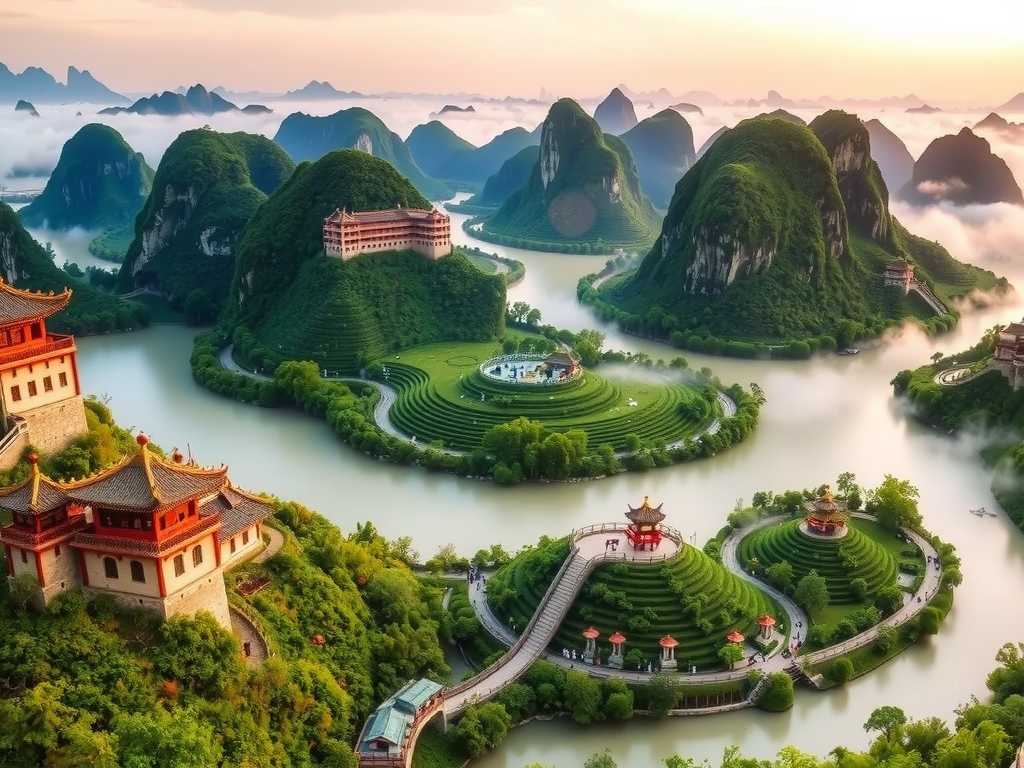
Transitioning from historical marvels to natural splendor, the landscape around Guilin and Yangshuo represents the classic Chinese scenery depicted in ink paintings. The Li River cruise from Guilin to Yangshuo is the centerpiece, where you’ll glide past sheer limestone karst peaks, bamboo groves, and water buffalo grazing along the banks. The 83-kilometer journey is a serene immersion in nature.
For active exploration, Yangshuo is the base. Rent a bicycle and ride through the Yulong River Valley, passing ancient stone bridges and vibrant rice paddies with those iconic peaks as a constant backdrop. An early morning hike or a bamboo raft ride offers perspectives away from the main tourist flow. As highlighted in a National Geographic travel feature, “This region’s beauty is not static; it changes with the mist and light, offering a different scenic wonder at every hour.”
The Forbidden City & Imperial Beijing
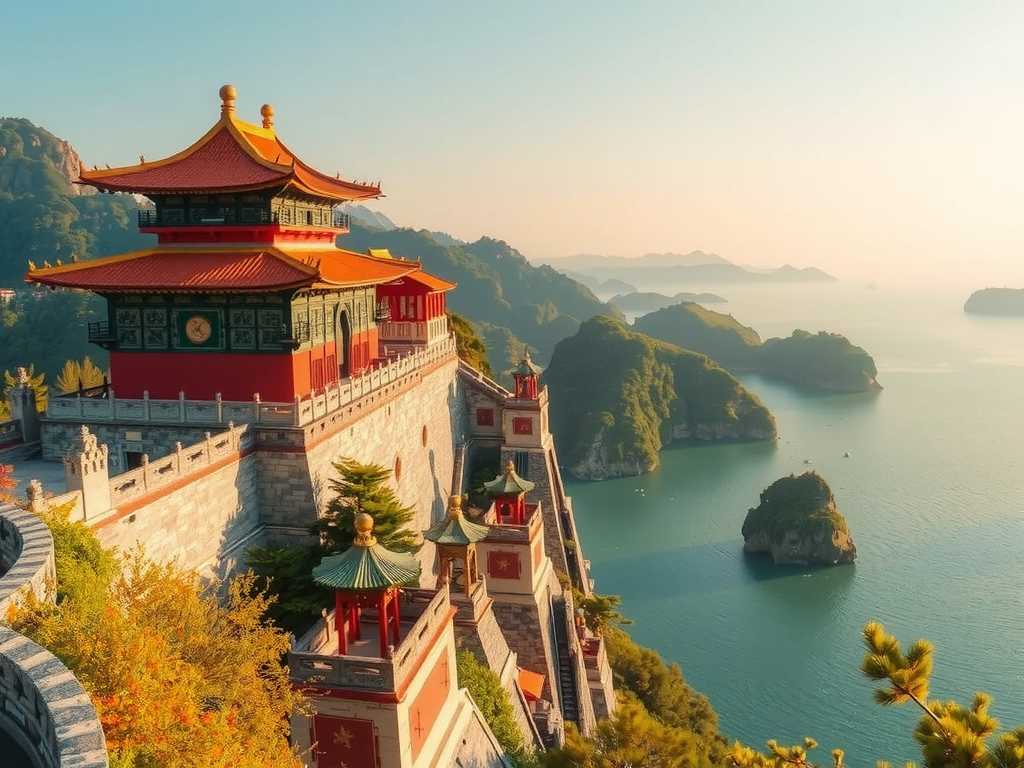
At the heart of Beijing lies the Forbidden City, the world’s largest and best-preserved ancient wooden palace complex. For nearly 500 years, it was the exclusive domain of emperors. Its sheer scale—containing 980 buildings—can be daunting. Focus on the central axis, walking from the Meridian Gate through the Hall of Supreme Harmony to the Imperial Garden.
To avoid the heaviest crowds and experience its grandeur, aim for weekday afternoons. Combine your visit with a stroll over to Tiananmen Square and, later, a climb up Jingshan Park for a panoramic view of the palace’s golden roofs laid out in perfect symmetry. This bird’s-eye view truly encapsulates the architectural genius and imperial ambition of ancient China, making it a non-negotiable stop among Beijing’s top tourist attractions.
The Potala Palace & Tibetan Plateau in Lhasa
Venturing onto the “Roof of the World,” the Potala Palace in Lhasa, Tibet, is a scenic and spiritual wonder. This monumental fortress-palace, once the winter residence of the Dalai Lamas, towers over the city. Its white and maroon walls seem to grow organically from the Red Hill. The interior is a labyrinth of chapels, tombs, and prayer halls filled with priceless Tibetan art.
Visiting requires acclimatization to the high altitude (over 3,600 meters). Plan for a slow pace. The palace limits daily visitors, so book your timed ticket well in advance. The surrounding Barkhor Street, a pilgrim circuit, offers a vibrant immersion into Tibetan Buddhist culture. This destination is less about checklist tourism and more about profound cultural immersion amidst staggering geography.
The Yellow Mountains (Huangshan): Misty Peaks and Pine Silhouettes
Huangshan, or the Yellow Mountains, is the epitome of China’s ethereal mountain scenery. Famous for its granite peaks piercing through seas of clouds, gnarled pine trees clinging to rocks, and hot springs, it has inspired poets and painters for centuries. A visit here is active, involving cable car ascents and hours of hiking along well-maintained but steep paths.
Key sights include Beginning-to-Believe Peak, Flying Over Rock, and the Bright Summit. For the ultimate experience, stay overnight at a summit hotel to witness both sunset and sunrise over the cloud ocean. As photographer and travel writer Zhang Wei puts it, “Huangshan’s beauty is 30% rock and trees and 70% the ever-changing atmosphere. Patience is rewarded with moments of breathtaking, almost surreal, natural drama.”
West Lake: Hangzhou’s Poetic Masterpiece
West Lake in Hangzhou is a masterpiece of designed landscape, blending man-made pagodas, causeways, and gardens seamlessly with the natural lake and hills. It’s a scenic wonder of tranquility and classical aesthetics. The best way to experience it is slowly: take a leisurely boat ride to the Three Pools Mirroring the Moon islet, walk or cycle along the Su Causeway lined with willow trees, and visit the Leifeng Pagoda for a elevated view.
Each season offers a different charm: spring blossoms, summer lotus flowers, autumn moonlit nights, and a rare winter snowscape. It represents the Chinese philosophical ideal of harmony between humans and nature and is a perfect counterpoint to the grander, more dramatic attractions.
Practical Tips for Exploring China’s Top Attractions
Successfully visiting these sites requires some strategy. First, time your visit. Major holidays like Chinese New Year and National Week (early October) see massive domestic travel; avoid these periods if possible. Spring (April-May) and Autumn (September-October) generally offer the best weather nationwide.
Second, consider distances. China is huge. Internal flights or high-speed trains (which are efficient and punctual) are essential for covering ground between, say, Beijing, Xi’an, and Guilin. Allocate enough days per city to account for travel and jet lag.
Finally, embrace local guidance. At historical sites like the Forbidden City or Terracotta Army, a knowledgeable guide (or a quality audio guide) transforms ruins and artifacts into vivid stories, greatly enhancing your understanding and enjoyment.
Frequently Asked Questions
What is the best time of year to visit most of China’s top tourist attractions? The optimal windows are spring (April to early June) and autumn (September to October). During these months, you’ll generally avoid the extreme heat and humidity of summer and the bitter cold of winter in the north, while enjoying pleasant temperatures and clearer skies across most regions.
How many days do I need to see the main highlights? A well-paced trip covering the “Golden Triangle” of Beijing (Great Wall, Forbidden City), Xi’an (Terracotta Army), and Shanghai/Guilin (Li River) typically requires a minimum of 10-12 days. Adding a destination like Huangshan or Chengdu for the pandas would comfortably extend this to two weeks.
Is it difficult to travel in China without speaking Mandarin? In major tourist cities and at the key attractions listed, navigation is manageable with translation apps, hotel concierge help, and basic English signage at transport hubs and sites. Booking tours, hotels, and trains through reputable international platforms or using a local travel agent can significantly smooth the logistical challenges.
From the stone soldiers standing guard for eternity to the mist-wrapped peaks that seem to float above the clouds, China’s top tourist attractions offer a journey through time and terrain. They are a testament to human ambition and nature’s artistry. By planning around these iconic scenic wonders, you move beyond simple sightseeing to create a journey of genuine connection and unforgettable memory. Your adventure into the heart of one of the world’s oldest and most dynamic civilizations awaits.

发表评论