 admin
admin China’s Scenic Marvels: A Journey of Discovery
Planning a trip to China can feel overwhelming. With a landmass rivaling a continent and thousands of years of history, how do you move beyond the well-trodden path of the Great Wall and Forbidden City to discover the soul-stirring, diverse landscapes that truly define this ancient land? The real journey begins when you unlock the secrets of China’s scenic marvels, a tapestry woven from surreal karst mountains, ethereal alpine lakes, vast deserts, and deep cultural heritage. This guide is your compass to navigating these wonders, transforming a daunting trip into a seamless journey of discovery.
Understanding the Geographic Tapestry of China
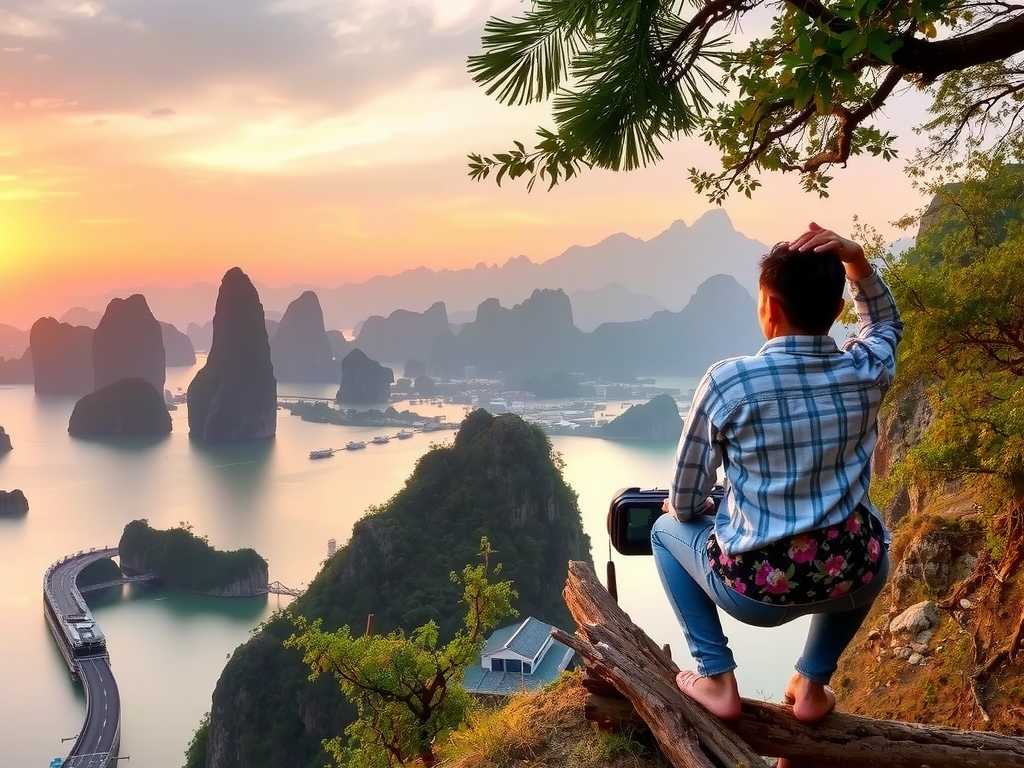
To truly appreciate China’s scenic diversity, one must first understand its dramatic geography. The country descends in three giant steps from the high plateaus of the west to the coastal plains of the east. This topography creates distinct scenic zones, each with its own unique character and best times for exploration.
The first step is the Qinghai-Tibet Plateau, often called "The Roof of the World." Here, the scenic marvels are defined by scale and spirituality. The crystal-clear waters of Lake Yamdrok, shaped like a coiling scorpion and surrounded by snow-capped peaks, are considered sacred. Further north, the otherworldly landscapes of the Qaidam Basin feature the Chaka Salt Lake, often dubbed the "Mirror of the Sky" for its perfect reflections.
Descending to the second step, you encounter the heartland of China’s dramatic natural beauty. This includes the Sichuan Basin, Yunnan-Guizhou Plateau, and parts of Inner Mongolia. This region is a hotspot for biodiversity and iconic imagery. As noted by geographer Dr. Li Wei in a 2023 report on Asian landforms, "The transition zone here, from alpine to subtropical, creates concentrated pockets of extreme scenic value, such as the stone forests and deep gorges found in Yunnan and Sichuan."
Iconic Regions for Your Scenic Itinerary
Crafting an itinerary requires focusing on regions that offer the most profound encounters. These areas are not just visually stunning but are gateways to understanding China’s environmental and cultural depth.
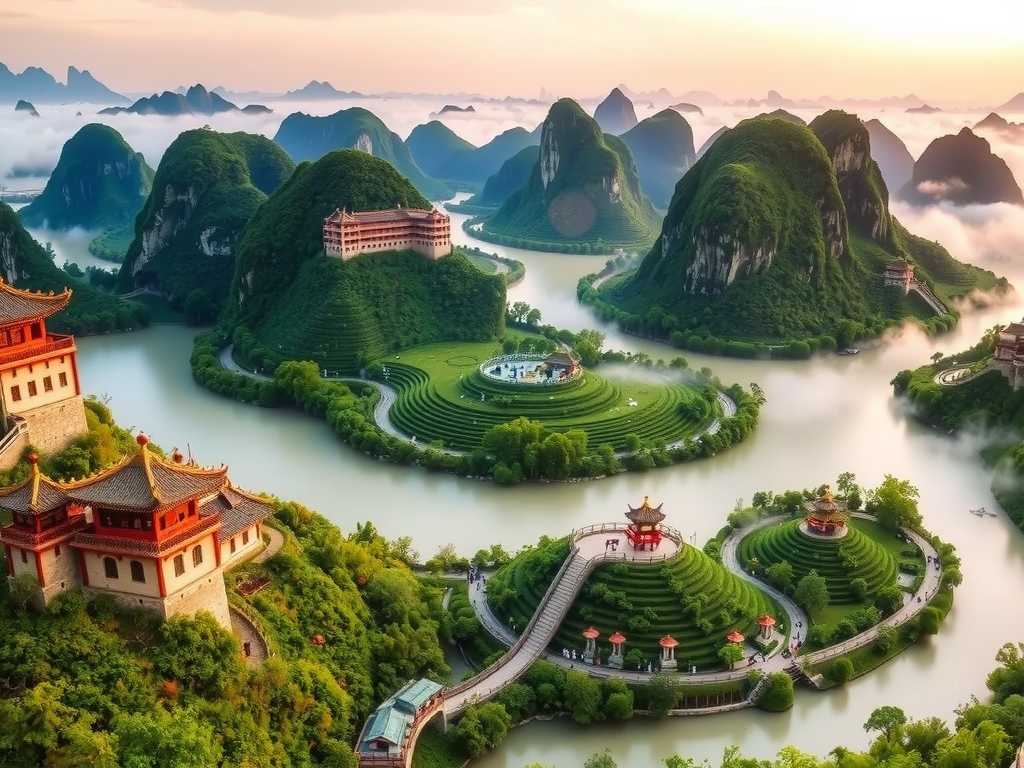
The Avatar Mountains and Karst Kingdoms of Zhangjiajie and Guilin No journey through China’s scenic marvels is complete without witnessing the karst landscapes that have inspired poets and painters for centuries. In Guangxi, a cruise down the Li River from Guilin to Yangshuo presents a living scroll painting of mist-shrouded limestone peaks rising from emerald-green waters. This is the quintessential Chinese landscape.
For a more dramatic experience, head to Zhangjiajie National Forest Park in Hunan. The towering sandstone pillars, some over 1,000 meters high, seem to defy gravity. The park’s unique quartz-sandstone formations, which directly inspired the floating Hallelujah Mountains in the film Avatar, are best explored via the glass-bottomed Zhangjiajie Grand Canyon Bridge and the Bailong Elevator built into the cliff face.
The Alpine Serenity of Jiuzhaigou and Huanglong In northern Sichuan, the valleys of Jiuzhaigou and Huanglong redefine the color blue. Jiuzhaigou, a UNESCO World Heritage Site, is a series of tiered alpine lakes connected by cascading waterfalls and surrounded by dense forests. The travertine terraces of Huanglong, formed by mineral-rich flowing water, create a golden, staircase-like landscape filled with turquoise pools. The sheer vibrancy and clarity of the water here are unparalleled, offering a serene counterpoint to China’s bustling cities. Visit in autumn to see the waters contrast with fiery red and gold foliage.
The Colossal Dunes and Singing Sands of the Gobi For a complete contrast, venture into the arid northwest to experience the sublime silence and scale of the desert. The Singing Sand Dunes and Crescent Moon Spring near Dunhuang are a miraculous oasis. Here, a pristine spring shaped like a crescent moon sits at the base of a massive dune that "sings" or hums when the wind blows. It’s a powerful reminder of the delicate balance between nature’s harshness and its nurturing side. A camel trek at sunset across these golden dunes is an unforgettable part of the discovery journey.
Practical Insights for an Immersive Discovery Journey
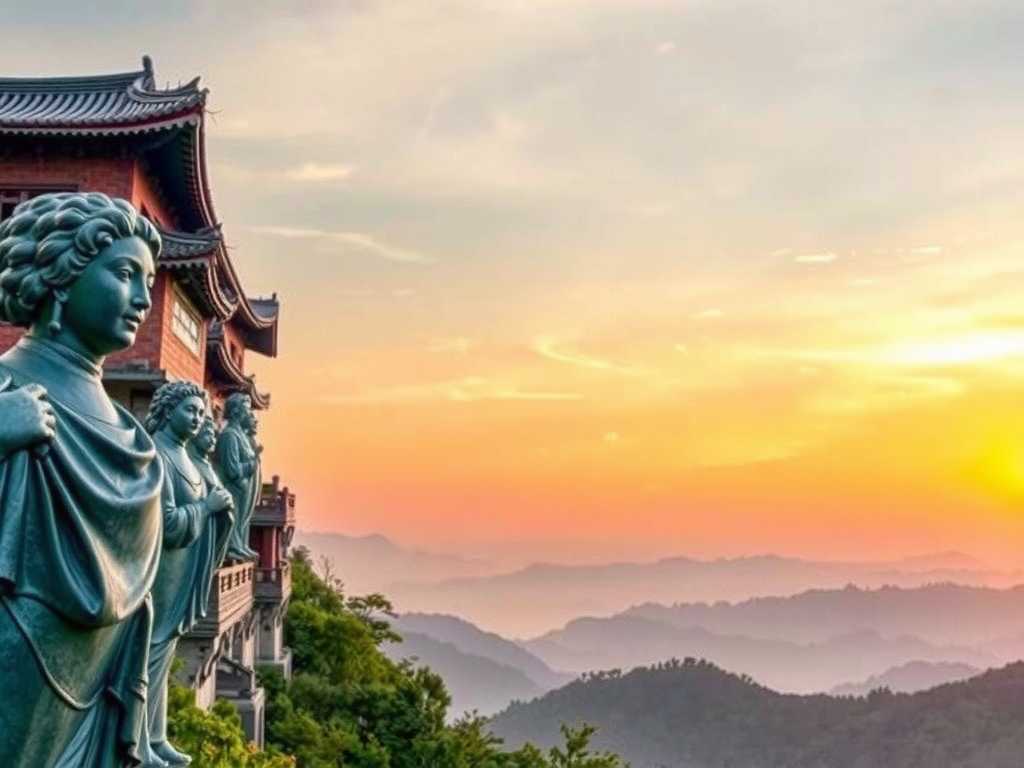
Knowing where to go is half the battle; knowing how to experience it deeply is the other. Here are practical steps to ensure your journey is enriching and smooth.
Step 1: Strategic Timing and Seasonality China’s climate varies wildly. Research is key. Spring (April-May) and Autumn (September-October) are generally ideal for most regions, offering mild temperatures and clear skies. Summer is perfect for the high-altitude Tibetan Plateau but can be crowded and rainy elsewhere. Winter offers stark, crowd-free beauty in places like the Great Wall or Harbin’s ice festival, but some mountain parks may have limited access.
Step 2: Embracing Sustainable and Deeper Travel Move beyond large group tours. Opt for smaller, licensed tour operators who prioritize sustainable practices. Consider homestays in ethnic villages like those of the Miao in Guizhou or the Tuva in Kanas. Participate in a local tea ceremony in Fujian or learn about Tibetan thangka painting. This experiential approach, as advocated by responsible travel networks, provides authentic insight and helps support local communities directly.
Step 3: Mastering Logistics and Cultural Nuances Domestic flights and high-speed trains connect major scenic hubs efficiently. Book these in advance, especially during national holidays. Download essential translation and mapping apps (like Baidu Maps). A simple phrasebook and understanding of basic etiquette—such as receiving a business card with both hands—go a long way. Always carry cash, as remote scenic spots may not accept foreign credit cards.
Navigating Your Questions
What is the best way to avoid crowds at major scenic spots like Zhangjiajie? Arrive right when the park opens, preferably on a weekday. Research which park gates are less popular for entry. Spend the night inside the park area (in authorized hotels) or in the nearby town to get an early start before day-trippers arrive from larger cities.
Is it feasible to visit Tibet independently as a foreign traveler? No, independent travel is not permitted for foreigners in the Tibet Autonomous Region. You must travel with a licensed tour operator who will arrange the required Tibet Travel Permit, a guided itinerary, and private transportation. Planning this well in advance (2-3 months) is crucial.
How should I pack for such diverse climates on one trip? The key is layering. Pack a moisture-wicking base layer, insulating mid-layers like a fleece, and a waterproof/windproof outer shell. Sturdy, broken-in hiking shoes are non-negotiable. Include sun protection (hat, sunglasses, high-SPF sunscreen) for high altitudes and deserts, as well as a reusable water bottle with a filter.
China’s scenic marvels offer more than just photo opportunities; they invite a journey of discovery into the forces that have shaped the land and its cultures. From the silent majesty of a desert dune to the vibrant pulse of a forested valley, each landscape tells a part of China’s grand story. By planning thoughtfully, traveling respectfully, and venturing beyond the obvious, you unlock a deeper, more personal connection to one of the world’s most geographically and culturally rich destinations. Your journey of discovery awaits.



发表评论