 admin
admin Discover China’s Scenic Beauty: Your Ultimate Travel Guide
Planning a trip to China can feel overwhelming. With a landmass so vast and a history spanning millennia, how do you even begin to choose where to go? You dream of breathtaking landscapes and profound cultural experiences, but the sheer scale of options leads to indecision and the fear of missing out on the true gems. This guide is designed to cut through the noise. We’ll navigate China’s scenic beauty together, transforming your planning from a daunting task into an exciting journey of discovery.
Understanding China’s Geographic Diversity

China’s terrain is a dramatic tapestry woven over thousands of miles. To truly appreciate its scenic beauty, it helps to understand its major geographic regions. The east is dominated by fertile plains, major rivers like the Yangtze, and sprawling megacities. Moving west, the land rises into the lofty Tibetan Plateau, often called "the Roof of the World." The north offers grasslands and deserts, while the south is characterized by karst mountains, rice terraces, and a subtropical climate. This incredible diversity means you can experience alpine lakes, desert dunes, deep gorges, and serene waterways all within one country. According to a report by the China National Tourism Administration, this geographic variety is the top cited reason for repeat visits by international tourists, who often return to explore a completely different landscape.
Top Regions to Experience China’s Scenic Beauty
The Majestic Southwest: Yunnan & Sichuan Yunnan and Sichuan are powerhouses of natural scenery. In Yunnan, the UNESCO-listed Stone Forest presents a surreal landscape of ancient limestone pillars. The terraced fields of Yuanyang create a stunning, ever-changing canvas of light and water. Meanwhile, Sichuan is home to the iconic Jiuzhaigou Valley, a nature reserve famed for its multi-colored lakes and spectacular waterfalls, and the nearby Huanglong Valley with its travertine terraces. For wildlife enthusiasts, this region is also the primary habitat of the giant panda.

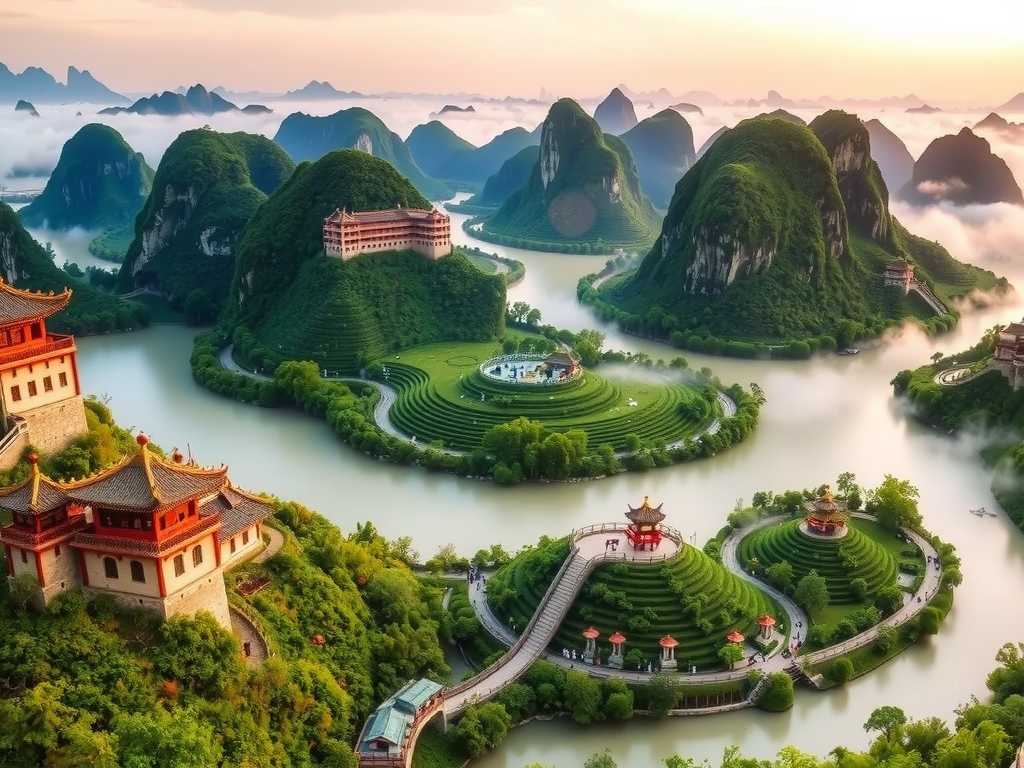
The Classic Panorama: Guilin & Yangshuo The landscape of Guilin and Yangshuo is the quintessential image of China’s scenic beauty for many. The Li River winds its way through a dreamscape of karst peaks, their reflections shimmering in the green water. The best way to experience this is on a leisurely river cruise or a bamboo raft. Cycling through the countryside around Yangshuo offers an intimate encounter with rural life against this dramatic geological backdrop.
The Rugged Northwest: Gansu & Xinjiang For a sense of awe-inspiring scale and history, head northwest. Gansu province is where you’ll find the otherworldly Rainbow Mountains of Zhangye Danxia, with their striated colors, and the immense Mogao Caves, a treasure trove of Buddhist art. Further west, Xinjiang offers the vastness of the Taklamakan Desert and the stunning alpine beauty of Kanas Lake, often compared to the Swiss Alps.
The Alpine Splendor: Tibet A journey to Tibet is transformative. The pilgrimage to Mount Everest Base Camp offers unparalleled views of the world’s highest peak. Sacred Lake Namtso, one of the highest saltwater lakes on Earth, presents an almost surreal blue against the stark plateau. The unique Tibetan culture, set against this powerful landscape, creates an experience that is both visually and spiritually profound.
Practical Planning for Your Scenic Journey
Best Times to Visit Timing is crucial. Spring (April-May) and autumn (September-October) are generally ideal nationwide, with pleasant temperatures and clear skies. Summer can be hot and rainy in the south but perfect for the Tibetan Plateau and northern regions. Winter is excellent for visiting Harbin’s ice festival or the warmer south. Always check regional climate patterns.
Transportation and Navigation China’s high-speed rail network is efficient, comfortable, and perfect for connecting major hubs. For remote scenic areas, domestic flights are time-savers. Within regions, hiring a private driver or joining small tour groups is often the most practical way to reach natural sites. Apps like Baidu Maps and Ctrip are essential for navigation and bookings.
Cultural and Environmental Etiquette Respecting the environment is paramount. Always follow designated paths, carry out all trash, and avoid disturbing wildlife. When visiting ethnic minority regions or religious sites like Tibetan monasteries, dress modestly and ask permission before taking photographs of people. As noted by travel anthropologist Dr. Li Wei, "Respectful engagement turns a scenic visit into a meaningful cultural exchange, preserving the beauty for future visitors."
Curated Itineraries for Different Travelers
The First-Timer’s Classic Route (10-12 Days) Beijing (Great Wall, Forbidden City) → Xi’an (Terracotta Army) → Guilin/Yangshuo (Li River cruise) → Shanghai. This route blends iconic historical sites with a quintessential landscape experience.
The Nature Lover’s Deep Dive (14-18 Days) Chengdu (Panda Base) → Jiuzhaigou Valley → Shangri-La (Yunnan) → Tiger Leaping Gorge trek → Lijiang. This itinerary focuses intensely on the dramatic landscapes and biodiversity of southwest China.
The Adventurer’s Off-the-Beaten-Path (15-20 Days) Zhangjiajie (Avatar Mountains) → Fenghuang Ancient Town → Zhangye Danxia → Dunhuang (Desert & Mogao Caves) → Urumqi & Kanas Lake. This journey is for those seeking unique geology, desert vistas, and remote alpine beauty.
What is the best way to travel between scenic spots in China for non-Mandarin speakers? The high-speed train system is highly accessible, with English signage at major stations and online booking available through platforms like Trip.com. For remote natural parks, booking a private driver-guide through a reputable tour operator is highly recommended for ease and insight.
Are these natural destinations suitable for family travel with children? Absolutely. Destinations like the Li River cruise, the pandas in Chengdu, and the beaches of Hainan are very family-friendly. Opt for shorter hikes and ensure accommodations are booked in advance. For visiting high-altitude areas like Tibet, consult a doctor regarding altitude suitability for children.
How can I ensure my travel is sustainable and supports conservation? Choose eco-conscious tour operators, stay in locally-owned guesthouses, and adhere strictly to park rules. Consider visiting lesser-known but equally beautiful alternatives to highly congested sites during peak season to help reduce overtourism.
China’s scenic beauty is a profound invitation to explore, reflect, and be inspired. From the misty peaks of Guilin to the colorful ridges of Zhangye, each landscape tells a story of time and nature’s artistry. With thoughtful planning centered on your interests, your journey will be more than a collection of sights—it will be a deep engagement with one of the world’s most visually stunning and diverse countries. Let the landscapes be your guide.




发表评论