 admin
admin Explore China’s Scenic Wonders: Culture & Nature
Planning a trip to China can feel overwhelming. With a landmass so vast and a history spanning millennia, how do you choose where to go beyond the well-trodden path of the Great Wall and the Forbidden City? Many travelers seek a deeper connection, a journey that weaves together breathtaking natural landscapes with profound cultural immersion. They want more than just a photo opportunity; they desire an understanding of the stories, traditions, and philosophies etched into the very mountains, rivers, and villages. This guide is designed for you, the curious explorer ready to move past the checklist and truly experience the harmony between China’s majestic scenery and its living culture.
To navigate this incredible diversity, we focus on regions where nature and human heritage are inseparable. According to Dr. Li Wen, a cultural geographer at Peking University, "The Chinese concept of ‘shan shui’ (mountain-water) isn't just scenery. It's a philosophical framework where nature is a teacher, and cultural sites are deliberately positioned to create a dialogue with their environment." This principle is your key to unlocking a more meaningful travel experience.
The Spiritual Peaks: Sacred Mountains and Ancient Pilgrimages
China’s sacred mountains are the ultimate embodiment of culture intertwined with nature. They are not merely hiking destinations but spiritual centers that have attracted pilgrims, poets, and artists for centuries.
Mount Huangshan: The Apex of Classical Beauty Often called the "loveliest mountain in China," Huangshan’s sea of clouds, jagged granite peaks, and uniquely shaped pine trees have been the subject of countless ink paintings. Your journey here is a walk through a living art gallery. The challenging ascent past landmarks like Beginning-to-Believe Peak and the ethereal view from the Bright Summit Top reward you with perspectives that have inspired Daoist contemplation for generations. Stay overnight at a summit hotel to witness a sunrise that feels like watching the world being born anew.
Mount Tai: The Imperial Ritual and Ascendancy As the eastern peak of the Five Great Mountains, Mount Tai holds unparalleled historical significance. For over 3,000 years, emperors performed the Fengshan sacrifices here to report their achievements to heaven. The climb up the 7,000-step Heavenly Stairway is a physical and historical pilgrimage, passing stone inscriptions from various dynasties. Reaching the summit at Jade Emperor Peak at dawn, you stand where countless rulers stood, overlooking the plains below—a powerful reminder of China’s enduring imperial legacy.
The Poetic Waterways: Rivers, Lakes, and Man-Made Marvels
Water shapes civilization, and in China, it has inspired some of its most poetic and ambitious creations.
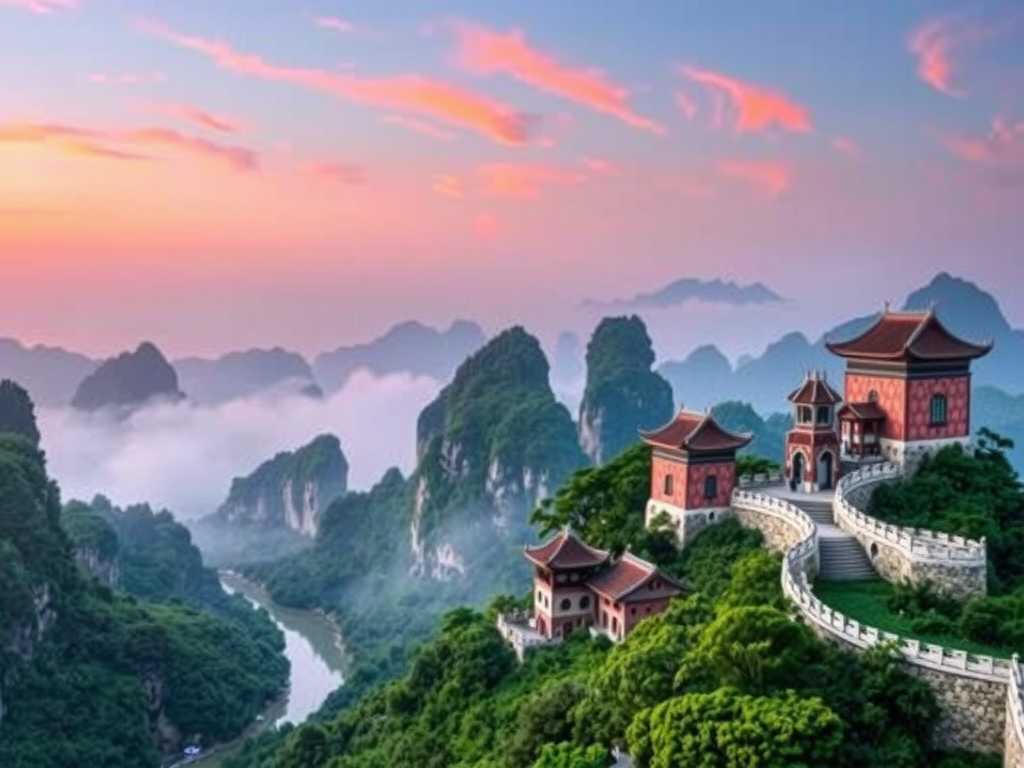
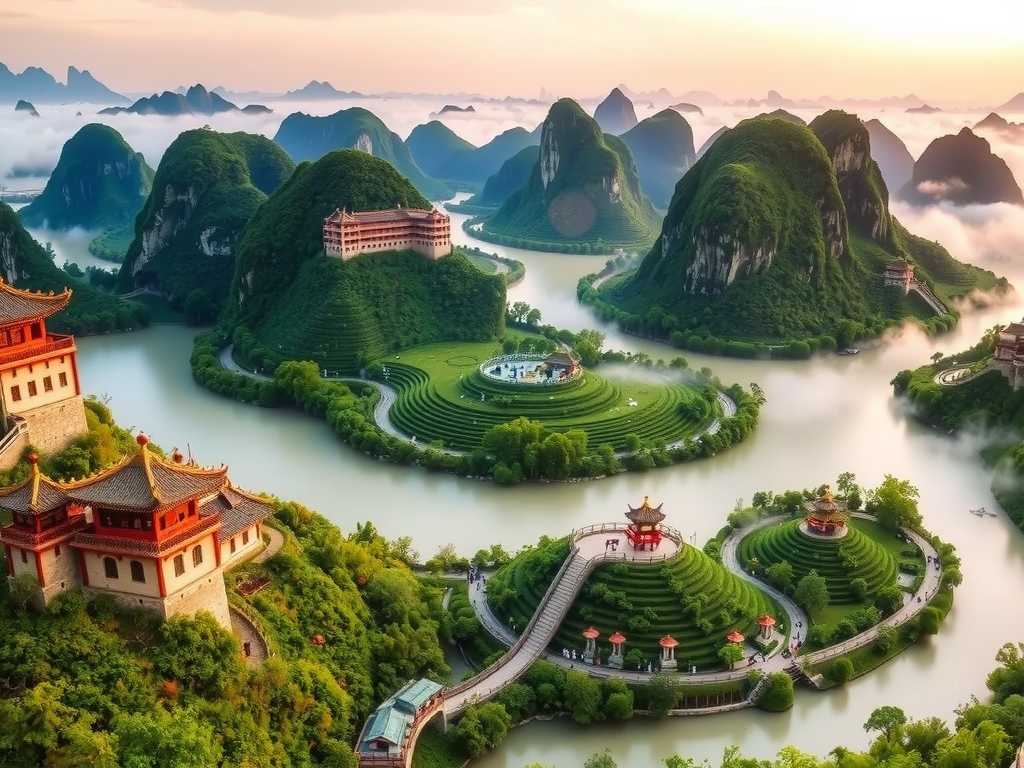
The Li River: A Scroll Painting Come to Life The karst landscape between Guilin and Yangshuo is legendary. A cruise down the Li River is the best way to absorb this serene beauty. As you drift past water buffalo, bamboo groves, and peaks with names like "Elephant Trunk Hill," you’ll understand why this scenery is stamped on China’s currency. For deeper immersion, cycle through Yangshuo’s countryside or try your hand at traditional cormorant fishing, connecting with the agrarian life that has flourished here for ages.
The Grand Canal: A Living Artery of History Stretching from Beijing to Hangzhou, this UNESCO World Heritage site is the world’s longest and oldest canal. While not a natural wonder, it is a breathtaking feat of engineering that shaped the nation’s economy and culture. Explore sections like the one in the ancient city of Suzhou, where the canal is lined with whitewashed houses and stone bridges. A boat ride here offers a glimpse into daily life along this still-vital waterway, a testament to human ingenuity harmonizing with geography.
Cultural Landscapes: Where People and Place Are One
Some landscapes are uniquely formed by human activity over centuries, creating ecosystems of both ecological and cultural value.
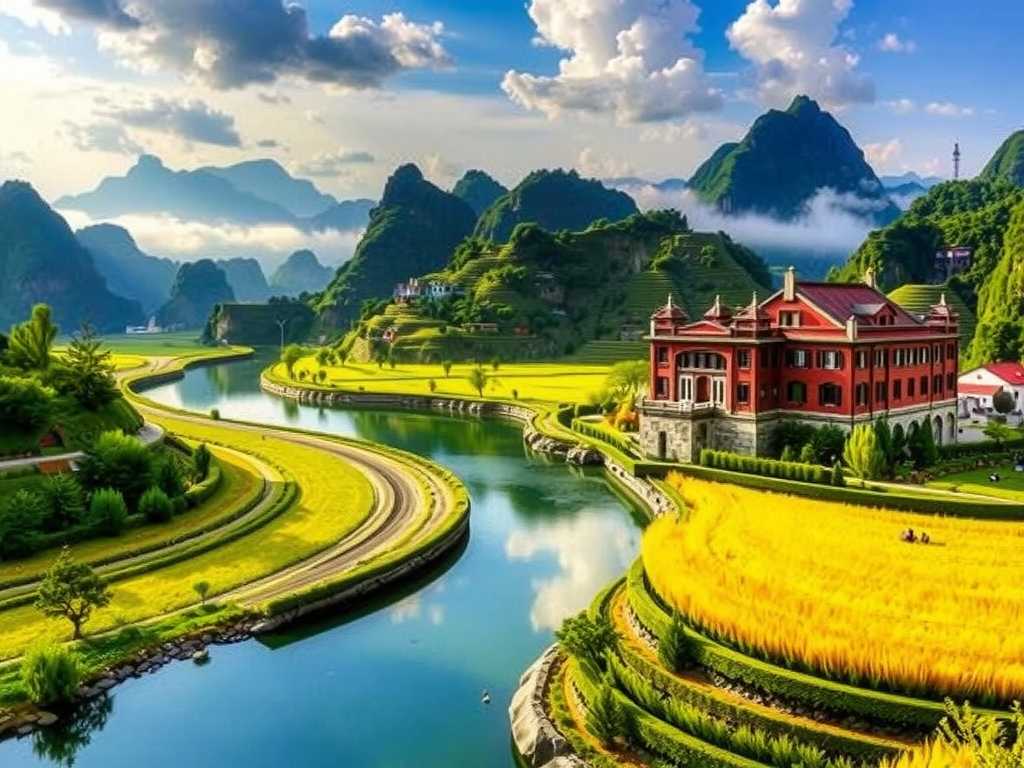
The Yuanyang Rice Terraces: Sculpted by the Hani People In southern Yunnan, the Hani people have transformed entire mountainsides into a staggering mosaic of terraced fields. These are not just farms; they are a complex ecological system and a sacred landscape. Visit between December and April, when the paddies are filled with water, reflecting the sky like thousands of giant mirrors at sunrise. Staying in a Hani village homestay allows you to learn about their intricate water distribution customs and annual festivals that give thanks to the land.
The Yellow Mountains (Huangshan) Region: Ancient Villages of Anhui While the mountain itself is famous, the surrounding region holds equal charm. Villages like Hongcun and Xidi, with their elegant grey-tiled houses, ornate carvings, and reflective ponds, are masterpieces of Ming and Qing dynasty planning. Designed using Feng Shui principles, they integrate seamlessly with the surrounding hills and waterways. Walking their quiet lanes feels like stepping into a classical Chinese novel, offering a profound sense of the scholarly culture that once thrived here.
Practical Pathways to a Deeper Journey
To truly embrace the culture-nature synergy, consider these approaches. First, time your visit with a local festival. Experiencing the Dragon Boat Festival on a river, the Mid-Autumn Festival by a lakeside, or a minority group’s harvest celebration adds vibrant context. Second, engage with intangible heritage. Take a short calligraphy or tai chi class in a park, or learn about traditional tea ceremonies in a plantation. These activities root abstract culture in physical experience. Finally, choose sustainable operators. Support local guides and community-based tourism initiatives that protect both the environment and cultural heritage, ensuring these wonders endure.
How many days do I need to experience both culture and nature in one region? A minimum of 3-4 days in one focused region is ideal. For example, spend two days hiking and observing the natural wonders of Huangshan, followed by two days exploring the ancient villages at its foot. This allows for a paced, immersive experience rather than a rushed checklist.
Is it difficult to travel to these scenic wonders without a tour group? While major sites like Huangshan are well-serviced by public transport, more remote areas like Yuanyang require more planning. High-speed trains connect many cities, but local buses or private car hires are often needed for the final leg. Using reliable travel apps and booking accommodations in advance is highly recommended for independent travelers.
What is the best season for this type of integrated travel in China? Spring (April-May) and Autumn (September-October) are generally the best. The weather is mild, landscapes are vibrant (with spring blossoms or autumn foliage), and crowds are thinner than in the summer peak. However, some destinations, like the Yuanyang terraces, have specific "water mirror" seasons in winter that are uniquely spectacular.
China’s true magic lies in the spaces where human spirit and natural grandeur converse. From the pilgrims’ steps on sacred peaks to the reflective waters of ancient terraces, each destination offers a chapter in a continuous story. By seeking out these intersections of culture and nature, your journey transforms from simple sightseeing into a meaningful dialogue with a civilization that has long viewed itself as part of, not separate from, the magnificent world it inhabits. Let this harmony be your guide.
发表评论