 admin
admin China’s Scenic Attractions: The Ultimate Bucket List for Every Traveler
Planning a trip to China can feel overwhelming. With a landmass rivaling a continent and thousands of years of history, how do you even begin to choose where to go? You dream of iconic landscapes, ancient wonders, and vibrant cultures, but the sheer scale of options leads to indecision. You worry about missing the true highlights, getting lost in crowded tourist traps, or failing to grasp the profound stories behind these places. This guide cuts through the noise. We’ve curated the definitive bucket list of China’s scenic attractions, blending must-see icons with expert insights to transform your travel anxiety into an actionable, unforgettable journey.
Why These Destinations Belong on Your List
This list isn’t just a compilation of famous spots. It’s built on the principles of diversity, cultural significance, and authentic experience. We’ve considered travel expert recommendations, like those from the China National Tourism Administration’s annual “Must-Visit” lists, and cross-referenced them with first-hand traveler experiences to ensure each site offers something profound. From natural geology that inspires poets to man-made marvels that defy time, each entry represents a pillar of China’s immense scenic and cultural heritage.

The Great Wall: More Than Just a Wall
No list of China’s scenic attractions is complete without the Great Wall. Stretching over 13,000 miles, it’s a testament to human perseverance. But visiting the right section is key to your experience.
- Mutianyu for Scenery and Accessibility: This restored section offers stunning views of wall snaking over forested mountains. It’s less crowded than Badaling and features a convenient cable car. Perfect for families and photographers seeking that classic postcard shot with manageable crowds.
- Jiankou for Adventure: Known as the “Wild Wall,” Jiankou is for the intrepid hiker. Its unrestored, crumbling majesty offers raw beauty and a physical challenge. You’ll need proper footwear and a guide here. As noted by historian William Lindesay, “Jiankou presents the Wall as it was reclaimed by nature, a powerful and humbling sight.”
- Jinshanling for a Balanced Hike: For a blend of restored and wild wall with minimal crowds, Jinshanling is ideal. The five-mile hike to Simatai showcases watchtowers with distinct architectural styles, offering a deeply immersive historical walk.
The Li River & Karst Peaks: A Painting Come to Life
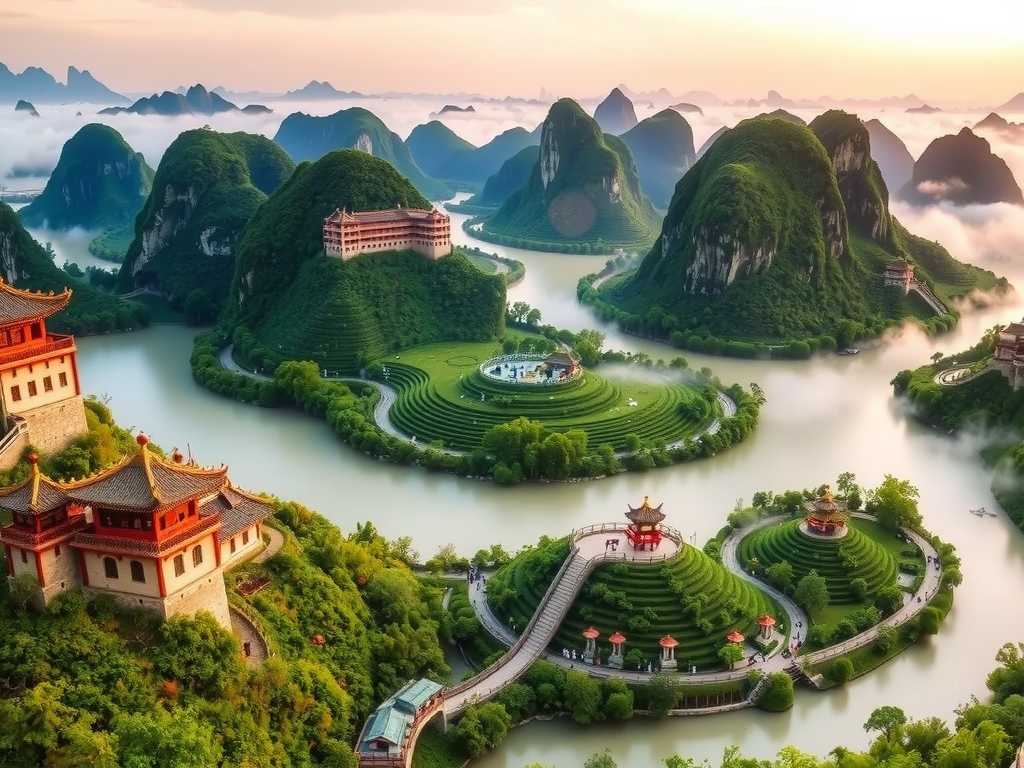
The landscape of Guilin and Yangshuo is the literal embodiment of classical Chinese art. The scenic attraction here is the serene, otherworldly panorama of karst limestone peaks rising from rice paddies and riverways.
- The Li River Cruise: The journey from Guilin to Yangshuo is the centerpiece. Drift past water buffalo, bamboo groves, and villages with names like “Painting Hill.” Opt for a premium cruise for better viewing decks and commentary that explains the local folklore tied to the rock formations.
- Yangshuo Countryside Exploration: Disembark in Yangshuo and explore by bike or electric scooter. Ride through the Yulong River valley, cross ancient stone bridges, and witness farmers tending their fields against the iconic backdrop. This is where you move from observer to participant.
- Expert Tip: Avoid the summer flood season. Early autumn offers clear skies, comfortable temperatures, and golden rice terraces, making it the optimal time for photography and hiking.
The Terracotta Army: An Emperor’s Eternal Guard
Discovered in 1974, the Mausoleum of the First Qin Emperor in Xi’an is one of the greatest archaeological finds of the 20th century. It’s a scenic attraction of a different kind—one of profound historical scale.
- Understanding the Scale: Pit 1 is the largest and most impressive, housing thousands of life-sized soldiers in battle formation. Observe the intricate details: each face is unique, with distinct hairstyles, expressions, and armor corresponding to rank.
- Beyond the Warriors: Don’t rush. Spend time at the smaller pits showcasing the command chariots and unexcavated areas. The on-site museum provides context about Emperor Qin Shi Huang’s tumultuous reign and his quest for immortality.
- Enhancing Your Visit: Consider hiring a licensed guide at the entrance. They bring the silent army to life, explaining the excavation process, the theories behind the army’s purpose, and recent preservation efforts detailed in archaeological reports.
The Zhangjiajie National Forest: Pillars of Fantasy
This park in Hunan province inspired the floating “Hallelujah Mountains” in the film Avatar. Its towering sandstone pillars, shrouded in mist, create a scenic attraction that feels utterly alien and ancient.
- Must-Do Experiences: Ride the Bailong Elevator (the “World’s Highest Outdoor Lift”) for a jaw-dropping ascent. Walk the glass-bottomed Zhangjiajie Grand Canyon Bridge for a thrill. Hike the Golden Whip Stream trail for a ground-level perspective of the colossal pillars.
- Crowd Management Strategy: This park is immensely popular domestically. Enter at opening time, use the efficient shuttle bus system to reach core areas like Yuanjiajie first, and visit on weekdays to avoid peak crowds.
- Photography Note: The mist is both a challenge and a blessing. It creates an ethereal mood but can obscure views. Patience is key; breaks in the weather reveal the landscape in dramatic light.
The Forbidden City & Imperial Beijing
While not a natural landscape, the Forbidden City in Beijing is a man-made scenic attraction of unparalleled architectural and historical grandeur. It’s the world’s largest palace complex, home to 24 emperors across five centuries.

- Navigating the Layout: The complex is divided into the Outer Court (for ceremonial purposes) and the Inner Court (the emperor’s living quarters). Follow the central axis for the main halls, but explore the eastern and western side halls for exhibits on clocks, jewelry, and palace life.
- Context is King: Before entering, walk to Jingshan Park across the street. Climb to the pavilion atop the hill for a breathtaking panoramic view of the palace’s golden roofs laid out in perfect symmetry—a perspective that underscores its designed power and order.
- Cultural Insight: As described by art historian Nancy Berliner, the Forbidden City’s design is a “physical manifestation of cosmic order and imperial authority.” Notice the use of colors (yellow for the emperor), numbers, and mythological creatures on rooftops, all rich with symbolic meaning.
The Potala Palace & Tibetan Plateau
Perched atop Red Hill in Lhasa, the Potala Palace is more than a palace; it’s the spiritual heart of Tibetan Buddhism and a scenic attraction that dominates the high-altitude skyline. Its imposing structure houses countless treasures, chapels, and tombs.
- Planning Your Visit: Acclimatize to Lhasa’s 3,700-meter altitude for at least 24-48 hours before attempting the climb up the palace’s many steps. Book your ticket in advance, as daily entries are strictly limited.
- A Spiritual Journey: Inside, follow the pilgrim path through dimly lit chapels fragrant with butter lamps. Observe devout Tibetans making offerings. The Dalai Lama’s former quarters and the sacred burial stupas offer a deep sense of history and devotion.
- Respectful Travel: Dress modestly, always walk clockwise around sacred objects and temples, and obtain permission before photographing people or interior spaces. This is a living religious site, not merely a museum.
The Yellow Mountains (Huangshan): A Poet’s Muse
Huangshan is the quintessential Chinese mountain, celebrated for its granite peaks, hot springs, sea of clouds, and peculiarly shaped pine trees. It has inspired countless works of art and poetry, making it a pinnacle scenic attraction for nature lovers.
- The Four Wonders: Plan your hike around experiencing its legendary features: the Strange Pines, the Absurd Stones, the Sea of Clouds, and the Hot Springs. Sunrise from a summit like Bright Top Peak is a bucket-list moment when these elements often converge.
- Hiking Logistics: You can ascend and descend by cable car, but the most rewarding experience involves a combination. A popular route is to cable car up, hike between peaks (like from Beginning-to-Believe Peak to Flying-Over Rock), and then cable car down. Stay overnight at a summit hotel to catch both sunset and sunrise.
- Seasonal Advice: Each season offers a different personality. Winter presents stunning snow and ice scenery with fewer visitors, while spring and autumn provide comfortable temperatures and dynamic cloud formations.
The Rainbow Mountains of Zhangye
Zhangye Danxia National Geological Park in Gansu province looks like a layered cake painted by nature. These striped hills of vibrant red, yellow, and green are the result of mineral deposits and sandstone erosion over 24 million years.
- How to See the Colors: The intensity of the colors is highly dependent on light. The best times are during sunrise or just after rain, when the rocks are damp and the colors are most saturated. Overcast days can make the palette appear muted.
- Park Exploration: The park is vast. Board the shuttle buses that run between four main viewing platforms. Each platform offers a different perspective and landscape shape, from sweeping valleys to close-up, textured walls.
- Photography Essentials: A polarizing filter can help reduce glare and enhance the color contrast. A wide-angle lens is perfect for capturing the vast, undulating landscape.
The Water Towns of the Yangtze Delta
Step back in time in towns like Zhouzhuang, Tongli, or Wuzhen. These “Venices of the East,” with their canals, stone bridges, and whitewashed Ming-era houses, offer a serene contrast to China’s modern metropolises and represent a unique genre of scenic attraction.
- Choosing a Town: Zhouzhuang is the most famous but can be crowded. Tongli has more resident life within its ancient quarters. Wuzhen is meticulously preserved and divided into more tourist-focused and more authentic zones. For a quieter experience, consider Xitang or Nanxun.
- The Ideal Experience: Stay overnight. Day-trippers leave by late afternoon, allowing you to wander quiet alleyways in the evening and see the lanterns reflect on the water at night. Take a hand-rowed boat ride for a slow-paced view of daily life along the waterways.
- Cultural Touchpoints: Visit a local workshop to see silk production or traditional woodblock printing. Enjoy a meal at a waterside restaurant, sampling local delicacies like Wansan pork hoof or freshly caught river fish.
What is the best time of year to visit most of these scenic attractions in China? The ideal windows are spring (April to May) and autumn (September to early November). These seasons generally offer mild temperatures, lower humidity, and stable weather across most regions, from Beijing to Guilin. They are perfect for hiking, photography, and avoiding the peak summer tourist rush and winter chill.
How can I manage travel between these diverse locations given China’s size? China’s high-speed rail network is your best friend. It’s efficient, comfortable, and connects major cities near these attractions (e.g., Beijing, Xi’an, Guilin, Zhangjiajie). For longer distances (e.g., to Lhasa or Zhangye), domestic flights are time-saving. Always plan your itinerary geographically to minimize backtracking.
Are these destinations suitable for family travel with children? Absolutely, with careful planning. Sites like the Mutianyu Great Wall (with a cable car), a Li River cruise, and the water towns are very family-friendly. For more challenging hikes (like Huangshan or Jiankou) or high-altitude destinations (Tibet), assess your family’s fitness and acclimatization needs. Engaging a local family-friendly guide can greatly enhance the experience for younger travelers.
From the monumental history etched into the Great Wall and the Forbidden City to the dreamlike natural canvases of Zhangjiajie and the Li River, this journey through China’s scenic attractions offers more than just sightseeing. It is an invitation to walk through living history, to witness artistic inspiration carved by time, and to understand the diverse tapestry of cultures that call this vast country home. By moving beyond the obvious and exploring with intention, you transform your bucket list into a collection of profound memories, each destination revealing a unique chapter in China’s endless story. Start planning, embrace the adventure, and prepare to be forever changed by what you discover.
发表评论