 admin
admin Top China Tourist Spots: Scenic Wonders You Must Experience
Planning a trip to China can feel overwhelming. With a landmass so vast and a history spanning millennia, how do you choose where to go? You want more than just crowded landmarks; you seek those breathtaking, soul-stirring scenic wonders that define the essence of this ancient land. This guide cuts through the noise to bring you the absolute top China tourist spots, focusing on natural majesty and cultural landscapes that have inspired poets and painters for centuries. We’ll navigate these iconic destinations, offering practical insights to transform your itinerary from a checklist into a profound journey.
Navigating China’s Geographic Marvels

China’s landscape is a dramatic tapestry woven with towering mountains, serene rivers, and otherworldly rock formations. These are not just backdrops; they are the main characters in China’s story.
The Avatar-Inspired Peaks of Zhangjiajie Hailed as the inspiration for the floating Hallelujah Mountains in the film Avatar, Zhangjiajie National Forest Park in Hunan Province is a geological fantasy. Thousands of quartz-sandstone pillars, some over 200 meters tall, rise abruptly from the misty forest floor. The experience is surreal.
- Tianzi Mountain: For a panoramic view of the “peak forest,” take the cable car up to Tianzi Mountain. On a clear day, you can see pillars stretching to the horizon like an army of stone giants.
- Yuanjiajie Scenic Area: This is the heart of the “Avatar” landscape. Walk along the cliff-hugging pathways and cross the thrilling glass-bottomed Zhangjiajie Grand Canyon Bridge for an adrenaline-pumping perspective.
- Golden Whip Stream: For a gentler experience, hike the path alongside this crystal-clear stream flanked by lush greenery and towering pillars. It’s a peaceful contrast to the mountain-top vistas.
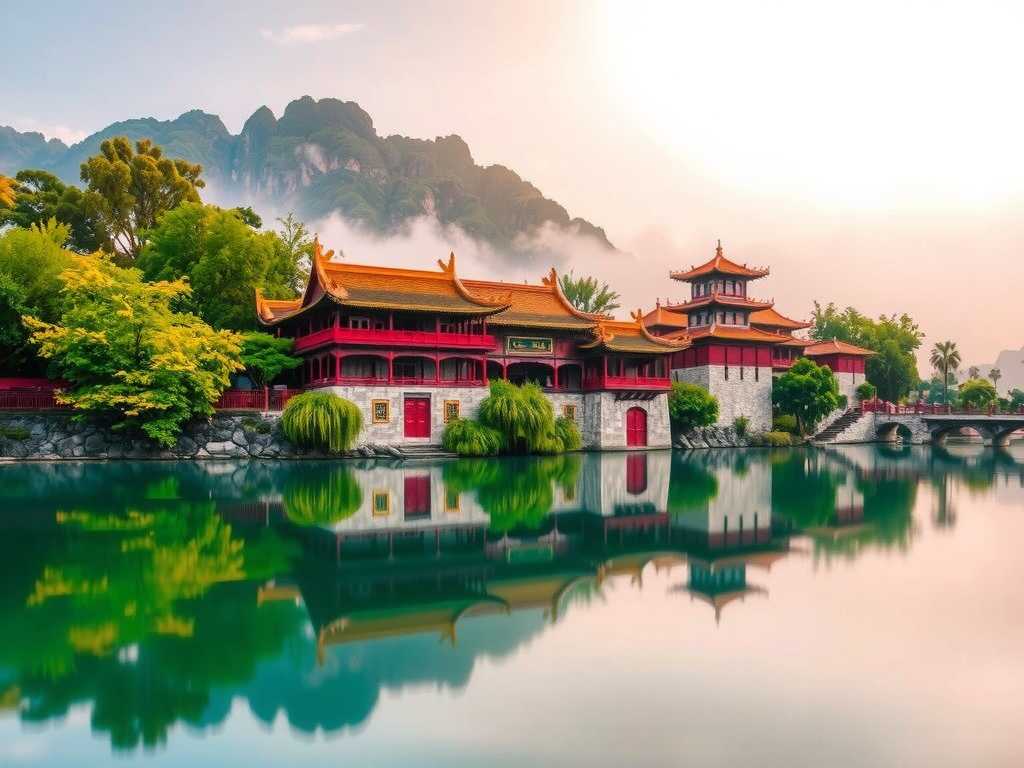
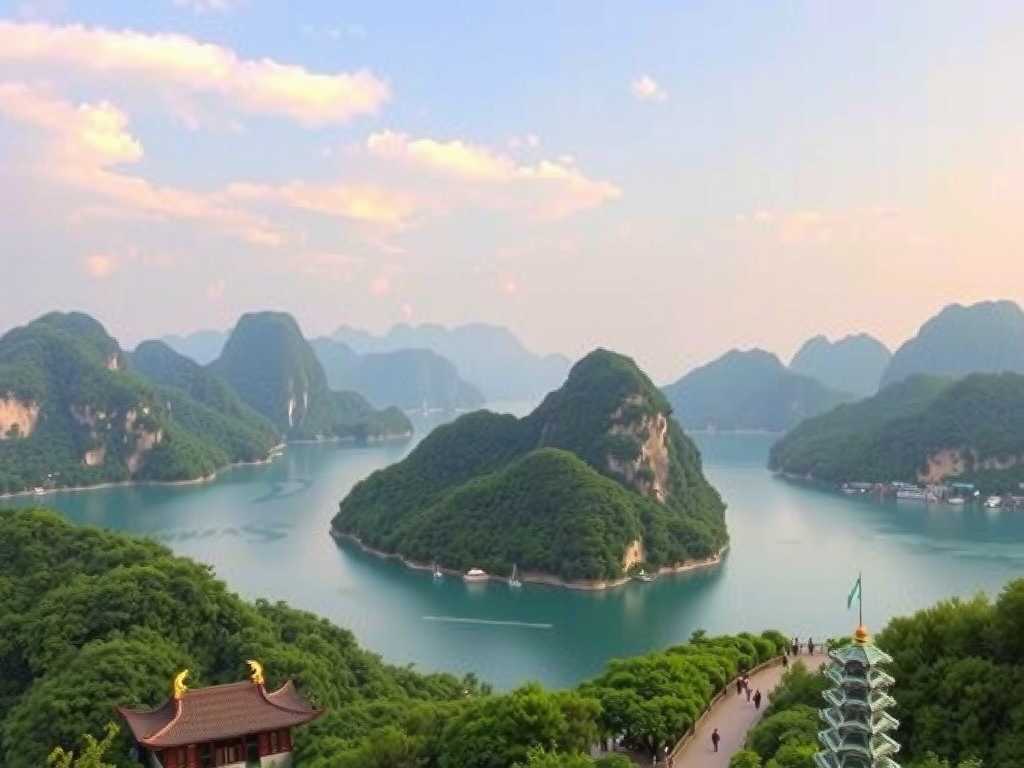
The Ethereal Beauty of Guilin and Yangshuo The phrase “East or west, Guilin landscape is best” is ingrained in every Chinese student’s mind. The Li River cruise from Guilin to Yangshuo is the quintessential Chinese scenic postcard come to life. Karst limestone peaks draped in greenery reflect on the gentle river, with water buffalo grazing along the banks and fishermen using traditional cormorant birds. It’s a slow, poetic journey through a living painting. In Yangshuo, rent a bicycle and explore the countryside, where the same dramatic peaks frame rice paddies and quiet villages.
The Rainbow Palette of Zhangye Danxia Located in Gansu Province, the Zhangye Danxia Landform Geological Park looks like an artist’s palette spilled over rolling hills. These rainbow mountains are a stunning natural phenomenon created by mineral deposits and sandstone eroded over 24 million years. The stripes of red, yellow, blue, and green are most vibrant at sunrise or sunset. Boardwalks guide visitors through this colorful, Martian-like landscape, offering countless photo opportunities at designated viewing platforms.
Iconic Landmarks That Define a Civilization
Some spots are more than just scenery; they are feats of human will and ingenuity set against nature’s grand stage.
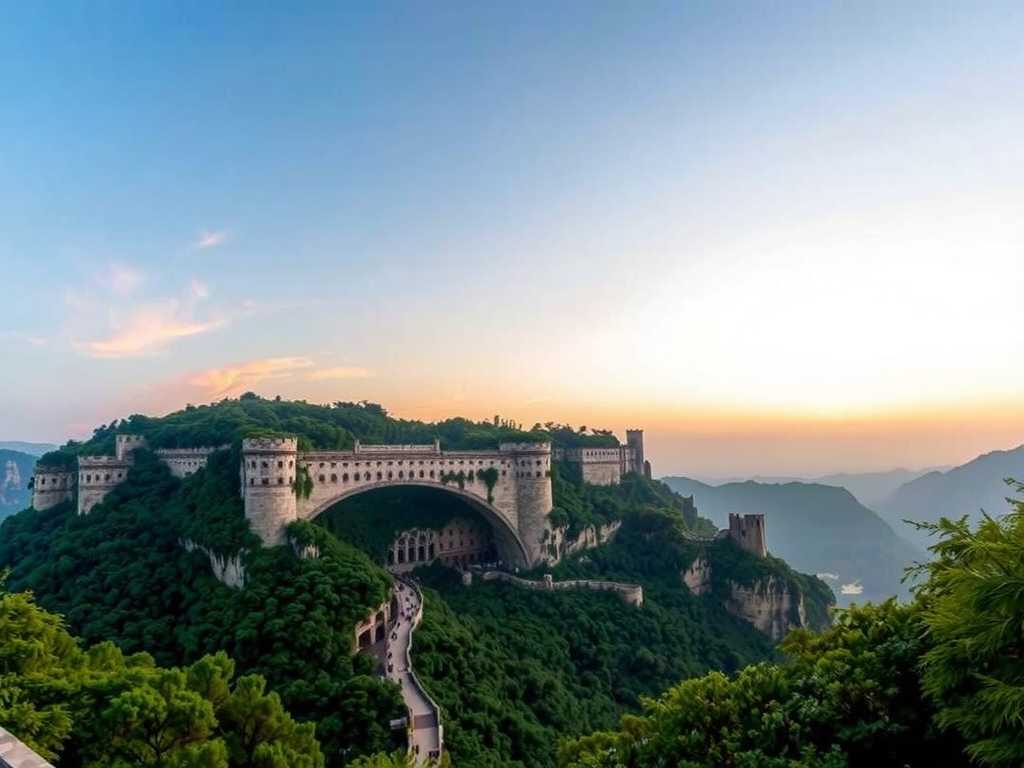
The Great Wall: A Dragon on Mountain Ridges No list of top China tourist spots is complete without the Great Wall. Stretching over 21,000 kilometers, it’s a masterpiece of engineering. To avoid the crowds and experience its raw, majestic beauty, skip Badaling.
- Mutianyu: Well-restored but less crowded, Mutianyu offers stunning views of the wall snaking over forested peaks. You can take a cable car up and even toboggan down.
- Jinshanling: For the adventurous, the Jinshanling section provides a more rugged, authentic hike. Its partially restored and wild sections offer unparalleled photography and a true sense of the wall’s scale and history. As historian and author William Lindesay notes, “Walking the wild wall is a conversation with history, where every crumbling brick has a story.”
The Forbidden City & Temple of Heaven: Imperial Grandeur While not a natural wonder, the Forbidden City in Beijing is a man-made wonder of staggering scale and symbolism. This vast imperial palace complex, with its intricate halls and sweeping courtyards, represents the celestial order on earth. A short distance away, the Temple of Heaven stands in a serene park. Its circular Hall of Prayer for Good Harvests, with its triple-eaved blue roof, is an architectural icon where emperors performed rites to ensure a bountiful harvest. Together, they showcase the philosophical and aesthetic heights of Chinese civilization.
The Terracotta Army: An Underground Empire Discovered in 1974 in Xi’an, the Terracotta Army is one of the most significant archaeological finds of the 20th century. Over 8,000 life-sized soldiers, chariots, and horses stand in battle formation, guarding the tomb of China’s first emperor, Qin Shi Huang. Each figure has unique facial features, a testament to astonishing ancient craftsmanship. Walking alongside the excavation pits is a humbling encounter with a ruler’s quest for immortality and power.
Planning Your Journey to China’s Scenic Wonders
Experiencing these sites seamlessly requires smart planning. China’s high-speed rail network, now the world’s most extensive according to the World Bank, is the most efficient way to connect between major hubs like Beijing, Xi’an, and Zhangjiajie. For remote areas like Zhangye, domestic flights are often necessary. Consider these tips:
- Best Times to Visit: Spring (April-May) and Autumn (September-October) generally offer the most pleasant weather nationwide. However, destinations like Zhangjiajie are magical (though busier) in summer greenery, while the Great Wall under winter snow is spectacular.
- Cultural Sensitivity: These are sacred and historic sites. Always follow designated paths, refrain from touching ancient relics or carving graffiti, and speak softly in temple complexes.
- Travel Style: While independent travel is possible, reputable tour operators can handle complex logistics, especially for non-Mandarin speakers, providing expert guides who add deep context to what you’re seeing.
Sustainable Travel in Fragile Ecosystems The popularity of these scenic wonders puts their environment at risk. You can make a difference. Use refillable water bottles, stay on marked trails to prevent erosion, dispose of all waste properly, and consider visiting during shoulder seasons to reduce overcrowding. Supporting local family-run guesthouses and eateries also helps distribute tourism benefits more evenly within the community.
Frequently Asked Questions
What is the single most impressive natural wonder in China? This is subjective, but for sheer, unique geological spectacle, Zhangjiajie’s pillar landscape is unparalleled. It feels like visiting another planet and offers a perfect blend of easy access and challenging hikes.
Is it difficult to travel between these top China tourist spots? Not at all. China’s transportation infrastructure is modern and highly developed. The bullet train network makes travel between cities like Beijing, Xi’an, and Guilin fast and comfortable. Remote natural parks are connected by efficient domestic flights or tourist buses.
How many days should I spend at each major site? A good rule of thumb is 2-3 full days for major city-based sites (e.g., Beijing with the Wall and Forbidden City, Xi’an for the Terracotta Army). For natural wonders like Zhangjiajie or the Guilin-Yangshuo area, allocate 3-4 days to fully appreciate the scenery and undertake key hikes or cruises without rushing.
From the rainbow ridges of Zhangye to the mystical peaks of Zhangjiajie, and from the stone dragon of the Great Wall to the serene Li River, China’s scenic wonders offer a journey through time, art, and elemental beauty. These top China tourist spots provide more than a photo opportunity; they offer a window into the philosophical heart of a culture that has long revered the harmony between humanity and nature. By planning thoughtfully and traveling respectfully, you ensure these wonders continue to inspire generations of travelers to come. Your adventure into the magnificent awaits.


发表评论