 admin
admin China’s Natural Scenic Wonders: Explore Today
Have you ever dreamt of a journey that feels like stepping into a living painting? A place where emerald rice terraces carve mountainsides, rainbow-colored lakes defy belief, and stone forests pierce the sky. Yet, the sheer scale and diversity of China’s landscapes can be overwhelming. Where do you even begin? How do you move beyond the iconic postcard spots to craft a truly unforgettable adventure that respects both the environment and local culture? This guide is your solution. We cut through the complexity to bring you a curated exploration of China’s most breathtaking natural scenic wonders, complete with practical insights for planning your journey.
Your Guide to China’s Breathtaking Landscapes
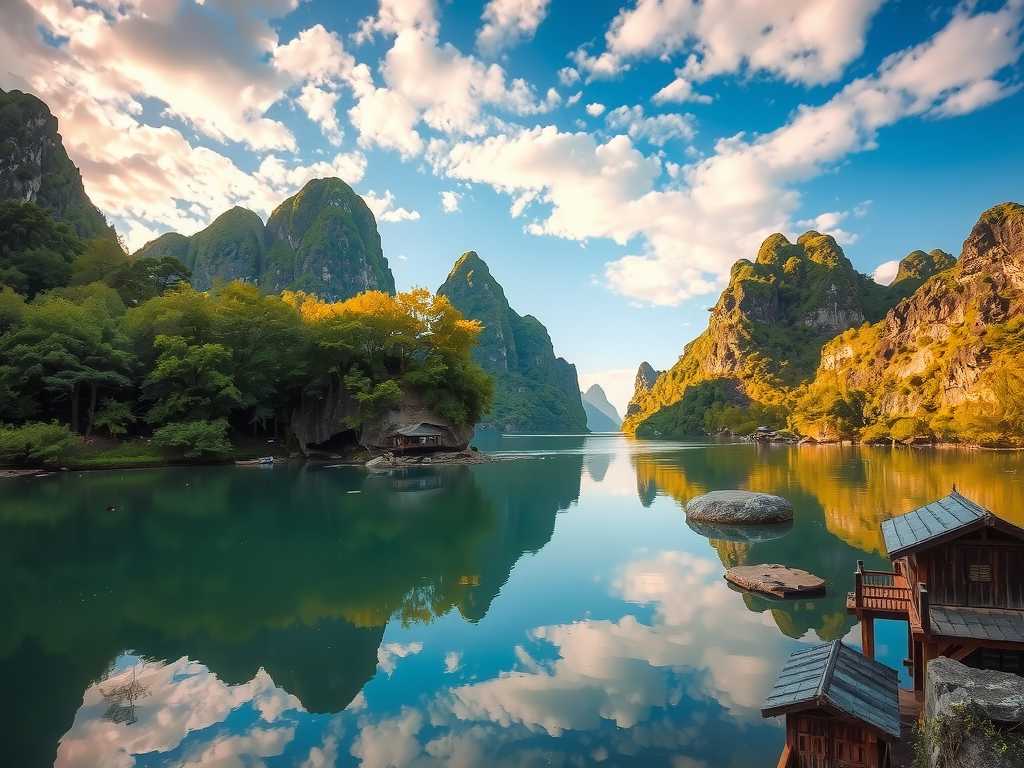
China’s territory spans deserts, glaciers, karst mountains, and coastlines, hosting some of the planet’s most dramatic geology. To truly appreciate these natural scenic wonders, it helps to understand them by region and theme.
The Surreal Karst Kingdoms
In southern China, water and limestone have collaborated over millennia to create dreamlike topography.
The Avatar Mountains of Zhangjiajie Rising abruptly from the misty forests of Hunan Province, the quartz-sandstone pillars of Zhangjiajie National Forest Park are a geological marvel. These towering formations, some over 1,000 meters tall, inspired the floating “Hallelujah Mountains” in the film Avatar. The best way to experience this wonder is by walking the vertigo-inducing glass-bottomed Zhangjiajie Grand Canyon Bridge and taking the Bailong Elevator—the world’s tallest outdoor lift—for panoramic views. As noted by geologist Dr. Li Wei, “Zhangjiajie represents a textbook example of sandstone peak forest erosion, a process rare on such a scale globally.”
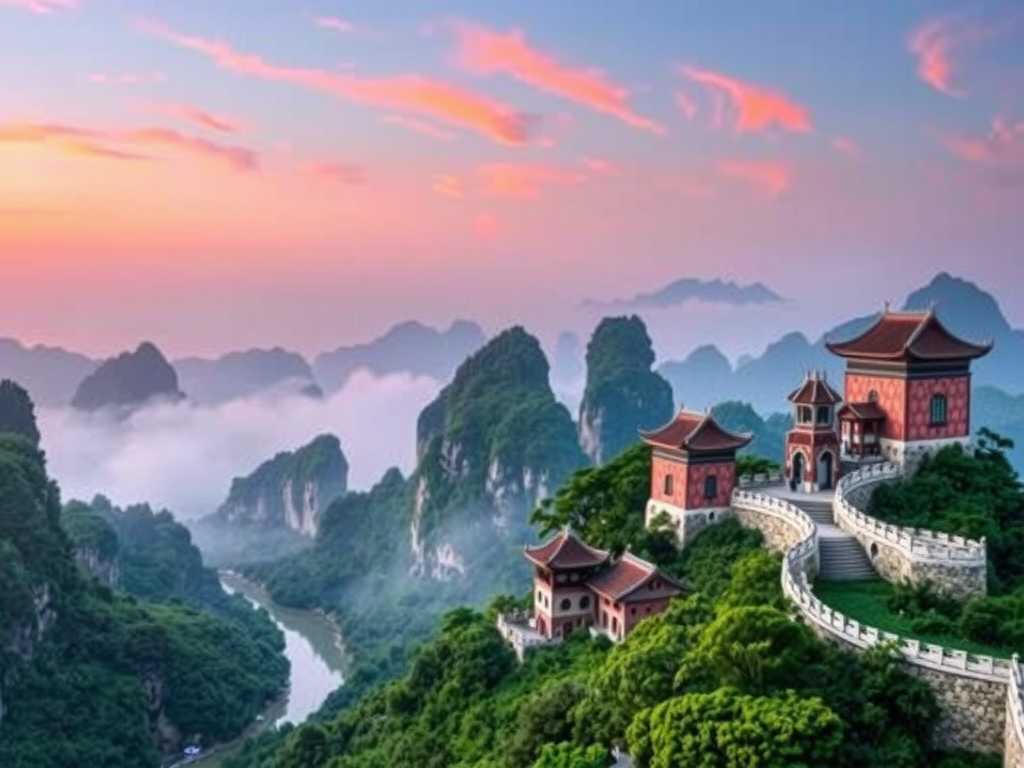
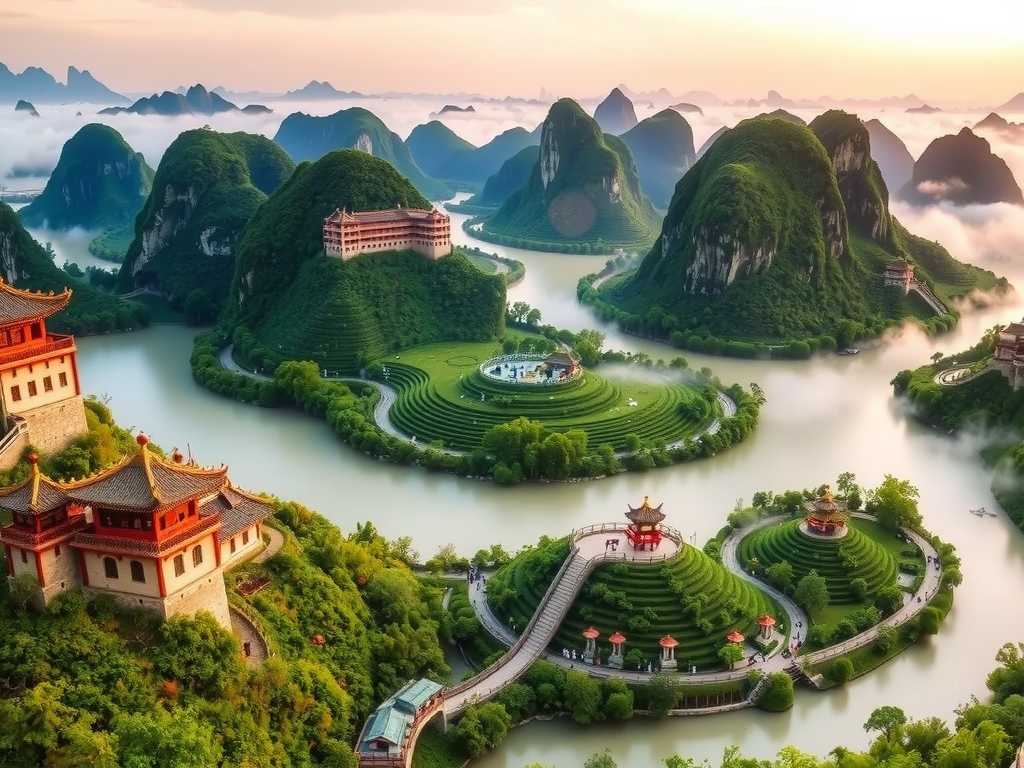
The Fairy-Tale Rivers of Guilin and Yangshuo The phrase “East or west, Guilin landscape is best” is famous for a reason. Here, the Li River winds serenely past verdant, dome-shaped karst hills. A leisurely cruise or bamboo raft ride from Guilin to Yangshuo is the quintessential experience. For active travelers, cycling through the countryside paths offers intimate encounters with rice paddies and water buffalo. The landscape transforms with the light, making sunrise over the river and sunset from Xianggong Hill utterly magical moments.
The Colored Palettes of Lakes and Waters
China’s waterways offer a stunning spectrum, from deep blues to vibrant minerals.
The Jewel-Toned Lakes of Jiuzhaigou Located in Sichuan Province, Jiuzhaigou Valley is a UNESCO World Heritage Site famed for its multi-level waterfalls and crystal-clear, colorful lakes. The stunning blues and greens of lakes like Five-Flower Lake and Long Lake are caused by high mineral content and aquatic vegetation. Visiting in autumn is particularly spectacular when the golden and crimson leaves of the surrounding forests reflect in the turquoise waters, creating a scene of unparalleled beauty.
The Rainbow Mountains of Zhangye Danxia This is where geology becomes art. The Zhangye Danxia Landform in Gansu Province features striped mountains in brilliant shades of red, yellow, orange, and green. These rainbow-like bands are the result of mineral deposits and sandstone layers being folded and exposed by tectonic uplift over 24 million years. The colors are most vivid after rainfall, and viewing from the designated platforms at sunset offers the most dramatic photographic opportunities.
The Majestic Peaks and Spiritual Landscapes
From sacred summits to terraced masterpieces, these landscapes speak to both the soul and the senses.
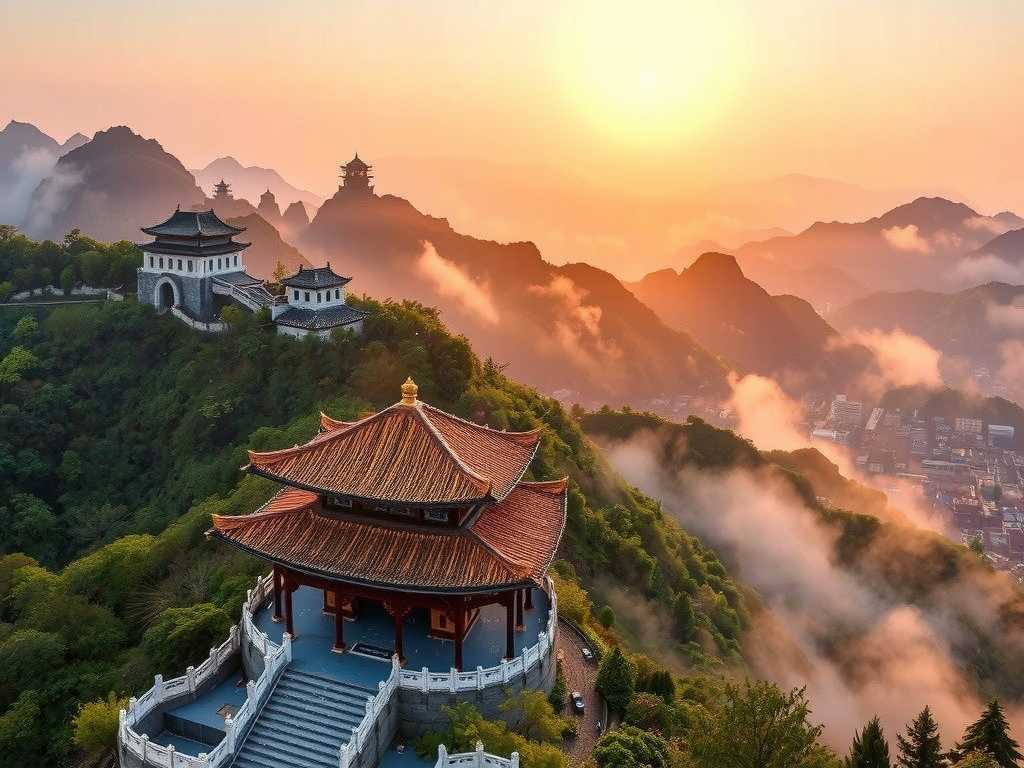
The Pilgrimage to Huangshan Affectionately called the “loveliest mountain of China,” Huangshan (the Yellow Mountains) in Anhui is the archetype of classical Chinese landscape painting. Its iconic features are the granite peaks emerging from a “sea of clouds,” gnarled ancient pine trees clinging to the cliffs, and natural hot springs. Hiking the steep trails at dawn to witness the sunrise from Bright Summit Peak is a rite of passage for many travelers seeking both natural beauty and profound tranquility.
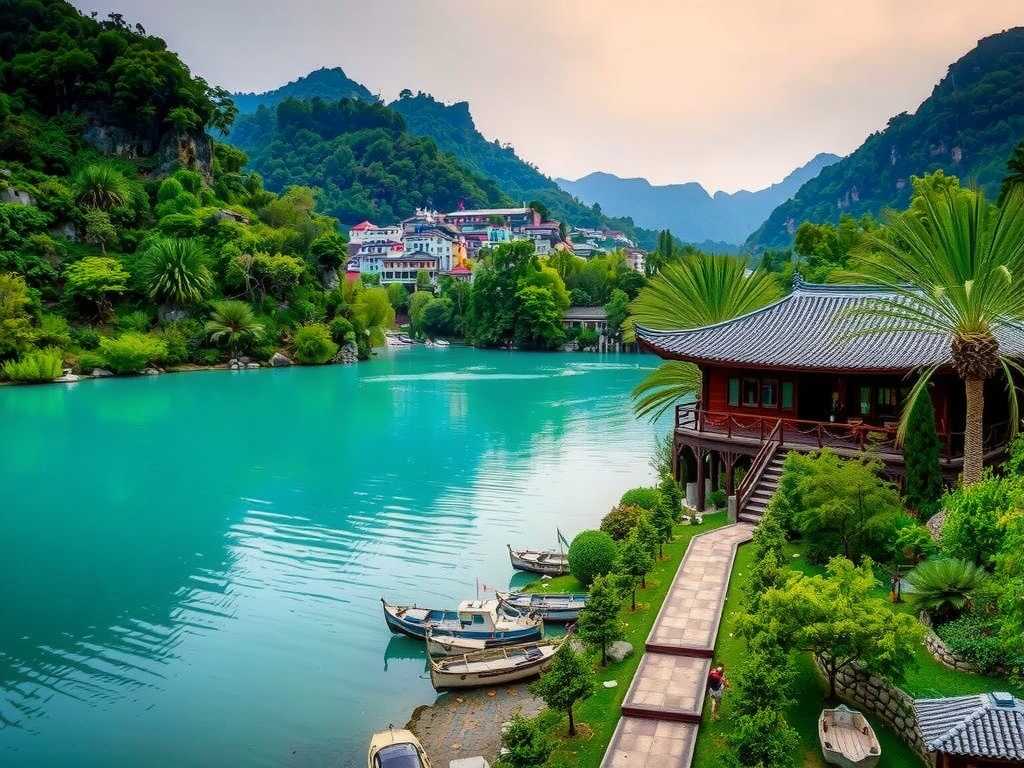
The Agricultural Art of the Yuanyang Rice Terraces In Yunnan Province, the Hani people have sculpted the Ailao Mountains over 1,300 years into a breathtaking masterpiece of agricultural engineering. The Yuanyang Rice Terraces cascade down the slopes, creating vast, shimmering mirrors of water during the planting season (December to March) and lush green or golden steps during the growth and harvest periods. This harmonious integration of human cultivation with the natural environment is a testament to sustainable living and offers some of the most spectacular sunrise and sunset views in all of China.
Planning Your Exploration of China’s Natural Wonders
To ensure your trip is as smooth as it is inspiring, consider these expert-backed tips.
Best Times to Visit China’s vast size means climate varies greatly. Generally, spring (April-May) and autumn (September-October) offer the most comfortable temperatures and stable weather across most regions. For specific sights: visit Jiuzhaigou in October for fall foliage, Zhangye Danxia in late summer for vibrant colors, and Yuanyang Terraces from December to March for the reflective water views.
Sustainable Travel Practices The preservation of these fragile ecosystems is paramount. Always stay on marked trails, carry out all trash, and use refillable water bottles. Respect local customs, especially in minority regions like Yunnan. As emphasized by the China Sustainable Tourism Council, “The long-term value of these wonders depends on visitors who act as conscientious stewards, not just consumers, of the landscape.”
Navigating and Access While major sites like Zhangjiajie and Huangshan have developed tourism infrastructure with cable cars and English signs, more remote areas like parts of Jiuzhaigou or the Danxia landform require more planning. Consider using reputable local tour operators for logistics, or ensure your travel apps (like Trip.com or Baidu Maps) are configured for use in China. High-speed rail now connects many major gateway cities, making travel faster and more efficient than ever before.
Frequently Asked Questions
What is the most underrated natural wonder in China? Many travelers overlook the Kanas Lake region in Xinjiang. Dubbed the “Oriental Switzerland,” it features alpine meadows, a mysterious color-changing lake, and the traditional villages of the Tuva people. It offers a completely different, serene landscape compared to the more famous southern karst sights.
Is it difficult to travel independently to these natural sites? It is increasingly feasible. Major sites have good transport links. However, for efficiency and deeper cultural insight, especially if language is a barrier, engaging a local guide or a small-group tour for specific destinations (like hiking in Huangshan or visiting Yuanyang) can greatly enhance the experience and handle complex local transport.
How can I avoid the crowds at these popular destinations? Two key strategies work well. First, visit during the shoulder seasons (late spring or early autumn) rather than national holidays. Second, explore beyond the most famous viewpoint. At Zhangjiajie, for instance, the less-crowded Golden Whip Stream hike offers equally stunning scenery. At the Li River, start your bamboo raft from the quieter Xingping section instead of the main Guilin pier.
China’s natural scenic wonders offer a journey through worlds that feel both ancient and alive. From the ethereal peaks of Huangshan to the radiant stripes of Zhangye’s mountains, each destination presents a unique dialogue between earth, time, and often, human ingenuity. With thoughtful planning and a respectful approach, your exploration will be more than a vacation—it will be a profound connection with some of the most spectacular landscapes on Earth. The adventure awaits.

发表评论