 admin
admin Explore China’s Cultural Scenic Masterpieces: A Journey Through Time and Landscape
Planning a trip to China can feel overwhelming. With so many famous sites, how do you choose between a majestic mountain, an ancient village, or a grand palace? The real challenge isn't finding a destination, but discovering places where profound culture and breathtaking scenery are perfectly intertwined. This guide is designed to solve that. We will explore China’s cultural scenic masterpieces—sites where history is etched into the landscape and nature frames human heritage. These are not just photo stops; they are immersive experiences that tell the story of a civilization.
Understanding the Harmony of Culture and Nature
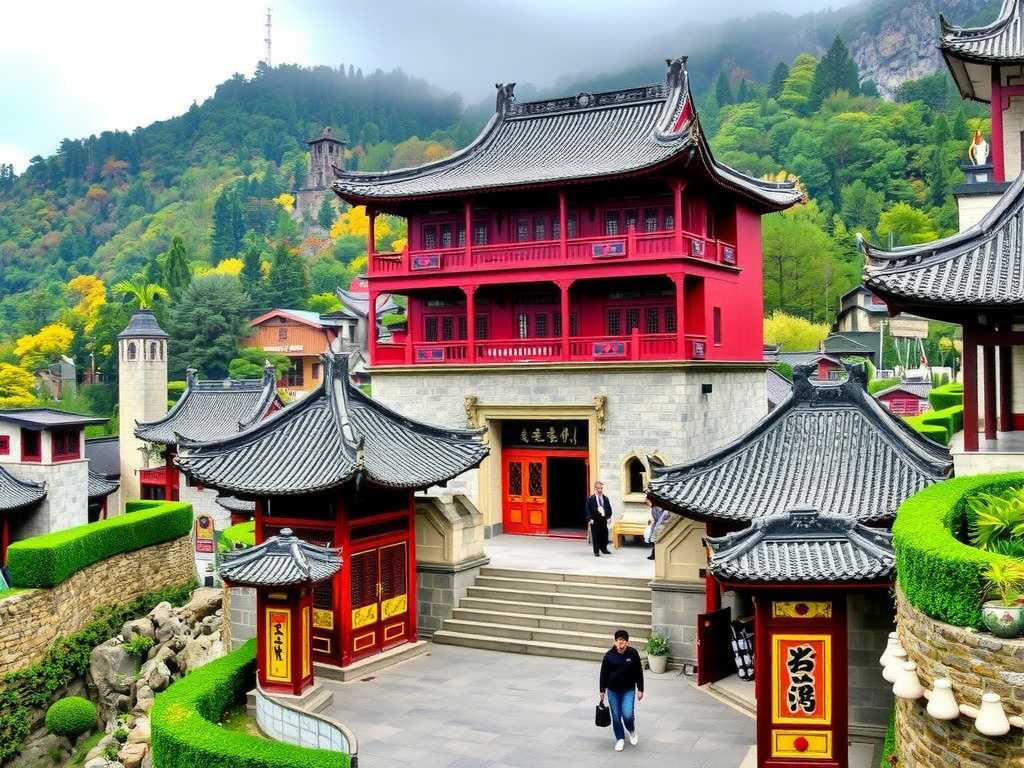
The essence of China's greatest sites lies in a philosophical concept: harmony between humanity and heaven. For millennia, Chinese poets, painters, and philosophers sought inspiration in nature, viewing mountains, rivers, and forests as living entities. This wasn't mere admiration; it was a spiritual dialogue. Cultural structures were often designed to complement, not conquer, their surroundings. This intentional fusion creates the unique category of cultural scenic masterpieces you can experience today.
A Curated Journey Through China’s Top Cultural Landscapes
To truly appreciate these masterpieces, we move beyond simple lists. We categorize them by the type of experience they offer, helping you connect with the aspect of Chinese culture that calls to you.
The Imperial Grandeur: Architectural Wonders in Natural Settings
Some masterpieces showcase supreme human achievement, placed deliberately within nature’s canvas to symbolize power and cosmological order.
The Forbidden City & Jingshan Park, Beijing. While the Forbidden City itself is an architectural marvel, its cultural scenic significance is fully grasped from the vantage point of Jingshan Hill just to its north. Climbing to the pavilion atop this man-made hill offers a panoramic view. You see the vast, orderly symmetry of the golden-roofed palace complex aligned on a north-south axis, a layout deeply rooted in Feng Shui and imperial ideology. This perspective, where human-made order meets the skyline, encapsulates the imperial worldview.
The Summer Palace, Beijing. A textbook example of a designed cultural landscape. It is a "masterpiece of Chinese landscape garden design," as UNESCO notes, where natural features like Kunming Lake and Longevity Hill are artfully enhanced with pavilions, temples, bridges, and corridors. The Long Corridor is not just a walkway but a painted gallery overlooking the water. Here, the scenery is the culture—every view is composed, every structure named with poetic allusion, reflecting the imperial pursuit of idealized nature.
The Spiritual Sanctuaries: Mountains of Pilgrimage and Reflection
China's sacred mountains are perhaps the purest form of cultural scenic masterpieces. They are physical manifestations of spiritual beliefs, where every path, tree, and cliff has a story.
Mount Tai (Taishan), Shandong. Venerated for over 3,000 years, Mount Tai is the most revered of China's Five Sacred Mountains. Its cultural weight is immense. Emperors performed sacred rites at its summit to legitimize their rule. For travelers, the ascent is a pilgrimage through history. The winding path is lined with ancient stone inscriptions from past dynasties, temples like the Dai Miao at its base, and gates that mark the journey towards the heavens. Reaching the summit for sunrise is not just a scenic reward; it’s participating in a timeless ritual of endurance and awe.
The Buddhist and Taoist Mountains. Sites like Mount Emei (Emeishan) in Sichuan and Mount Wudang (Wudangshan) in Hubei offer distinct experiences. Mount Emei, with its "cloud sea" vistas and hidden monasteries like the Golden Summit, is a journey into Buddhist serenity. The presence of seemingly tame monkeys along the trails adds to its legendary atmosphere. Conversely, Mount Wudang is synonymous with Taoist philosophy and the birthplace of Tai Chi. Its ancient architectural complex, nestled seamlessly into the rugged cliffs and forests, demonstrates the Taoist principle of "wu wei" (effortless action)—building in harmony with the terrain. As noted by cultural historian Dr. Lin Wei, "These mountains are not just backdrops for temples; the temples are an organic extension of the mountain's spiritual energy."
The Poetic Idylls: Ancient Towns and Waterways
This category features landscapes shaped by everyday life and literary romance, where culture feels lived-in and intimate.
The Classical Gardens of Suzhou. These are microcosms of the world, designed by scholar-officials during the Ming and Qing dynasties. Gardens like the Humble Administrator’s Garden or the Lingering Garden are not about size but about artistic composition. Every element—a carefully framed window view of a bamboo grove, a pond reflecting a pagoda, a strategically placed rockery—is intended to evoke a painting or poem. Strolling through them, you experience the refined aesthetic and philosophical retreat sought by China’s literati class.
The Li River & Yangshuo, Guangxi. This is a landscape immortalized in ink paintings. A cruise from Guilin to Yangshuo passes by sheer karst limestone peaks shrouded in mist, water buffalo grazing by the riverbanks, and fishermen with cormorants. The culture here is woven into the agrarian life and the folklore of the local Zhuang people. The scenery itself inspired the phrase "Guilin’s landscape is the best under heaven," making it a living cultural icon.
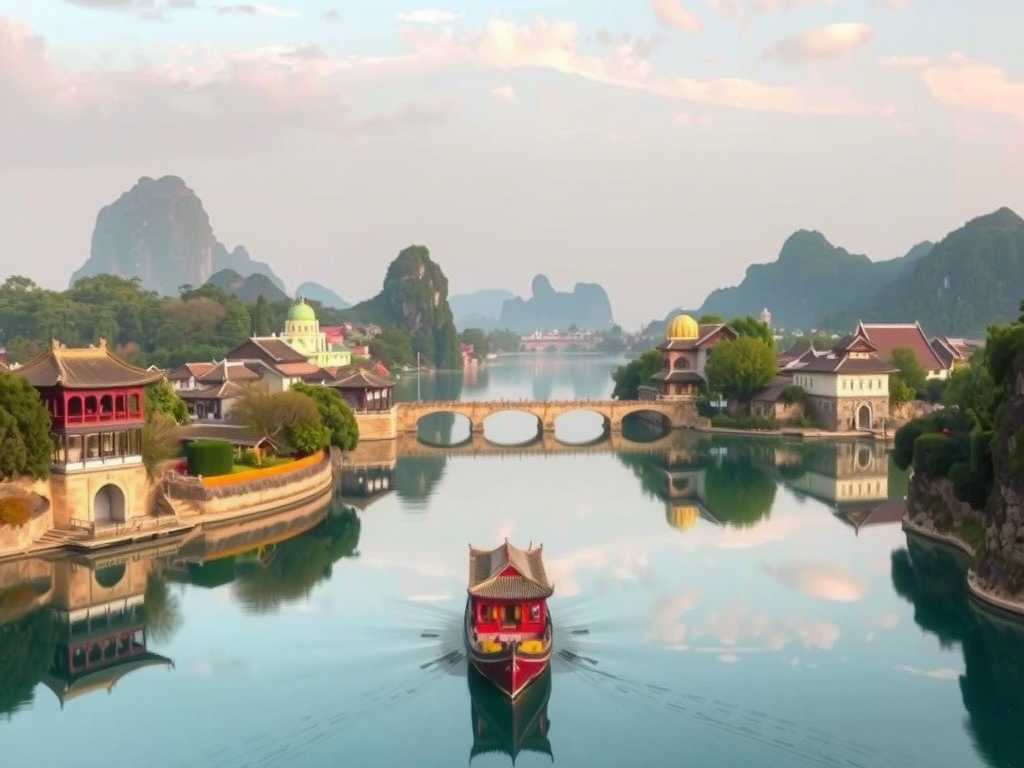
The Ancient Water Towns. Zhouzhuang, Wuzhen, and Xitang near Shanghai offer a glimpse into the canal-based life of Jiangnan (south of the Yangtze). Stone bridges arch over slow-moving waterways, and Ming-Qing era houses with white walls and black-tiled roofs line the shores. The cultural experience is in the ambiance: taking a boat ride, listening to local opera, or sipping tea in a waterside café. It’s a softer, more lyrical scenic masterpiece.
The Silk Road Echoes: Desert Monuments and Cave Art
These masterpieces speak of cultural exchange, resilience, and artistic devotion in harsh, dramatic landscapes.
The Mogao Caves, Dunhuang. Located at a strategic oasis on the Silk Road, the Mogao Caves are a stunning fusion of art, religion, and geography. Carved into a cliff face in the Gobi Desert, this "Caves of the Thousand Buddhas" complex houses over 1,000 years of Buddhist wall paintings and sculptures. The arid desert climate helped preserve these vibrant artworks. Visiting them is a powerful contrast—the barren, vast desert outside versus the intricate, colorful spiritual worlds depicted inside each cave.
The Great Wall at Mutianyu or Jiankou. While the Great Wall is a cultural icon everywhere, visiting a section with dramatic topography highlights its scenic genius. At Mutianyu, the wall snakes over densely forested, rolling mountains. At the wilder Jiankou section, it climbs impossibly steep, jagged ridges. Seeing the structure follow the most treacherous mountain spines reveals its dual nature: a formidable military engineering feat and a man-made element that accentuates the raw beauty of the natural terrain. It is the ultimate cultural landmark defined by its scenery.
How to Plan Your Visit for an Authentic Experience
To move beyond a standard tour, consider these steps for a deeper engagement with these masterpieces.
First, research the cultural narrative. Before you go, learn the basic stories. What dynasty built this? What philosophical idea does it represent? Knowing why Mount Tai is sacred or what the rockeries in a Suzhou garden symbolize will transform your viewing.
Second, time your visit thoughtfully. Consider seasons and times of day. The Great Wall under a blanket of snow or the Li River at sunrise offers a different, often more profound, experience than a midday summer visit. Also, aim for weekdays to avoid massive domestic tourist crowds where possible.
Third, engage local expertise. Hiring a knowledgeable local guide at sites like the Forbidden City or Mogao Caves is invaluable. They can point out details you’d miss and explain the context, greatly enriching your understanding of the culture-scenery connection.
Finally, embrace slow travel. Don't rush. Sit in a Suzhou garden for an hour. Spend a night on Mount Emei. Allow time for the atmosphere and the scale of the landscape to sink in. The true essence of these places is felt, not just seen.
Frequently Asked Questions
What is the best time of year to visit these cultural scenic sites in China? Spring (April-May) and Autumn (September-October) are generally ideal nationwide, offering mild weather and beautiful natural colors. However, some sites have unique seasonal appeals, like the snow-covered Great Wall in winter or the misty peaks of the Li River after summer rains.
How can I be a respectful visitor at these often sacred or ancient sites? Always follow posted guidelines. Speak softly, especially in temples and caves. Do not touch carvings, paintings, or ancient walls. Refrain from climbing on restricted structures. Your respectful behavior helps preserve these masterpieces for future generations.
Are these destinations suitable for families with young children? Many are, with planning. Sites like the Summer Palace (with boat rides), the less-crowded sections of the Great Wall with cable cars (like Mutianyu), and the water towns can be engaging. However, very strenuous hikes (like some sacred mountain paths) or long, quiet cultural tours (like cave visits) may be challenging for very young children. Choose sites that match your family's interests and stamina.
China’s cultural scenic masterpieces offer more than a checklist of sights. They invite you into a worldview where a mountain is a temple, a garden is a poem, and a wall is a brushstroke on a mountainous canvas. This journey connects you to the enduring dialogue between Chinese civilization and the natural world. By seeking out these places where landscape and heritage are inseparable, you move beyond simple tourism to experience the soul of China’s artistic and spiritual legacy. Your adventure through these timeless landscapes awaits.
发表评论