 admin
admin Explore China’s Scenic Landscapes: Must-See Wonders for Every Traveler
Planning a trip to China can feel overwhelming. With a landmass so vast and a history spanning millennia, how do you even begin to choose where to go? The common pain point isn't a lack of options, but an abundance of them. You might worry about missing hidden gems, sticking only to crowded cities, or failing to experience the profound natural beauty and cultural depth that defines China’s scenic landscapes. This guide cuts through the noise. We’ll navigate beyond the postcard images to the very soul of the country’s terrain, offering a structured path to discover the must-see wonders that align with your travel dreams.
Understanding the Diversity of China’s Terrain
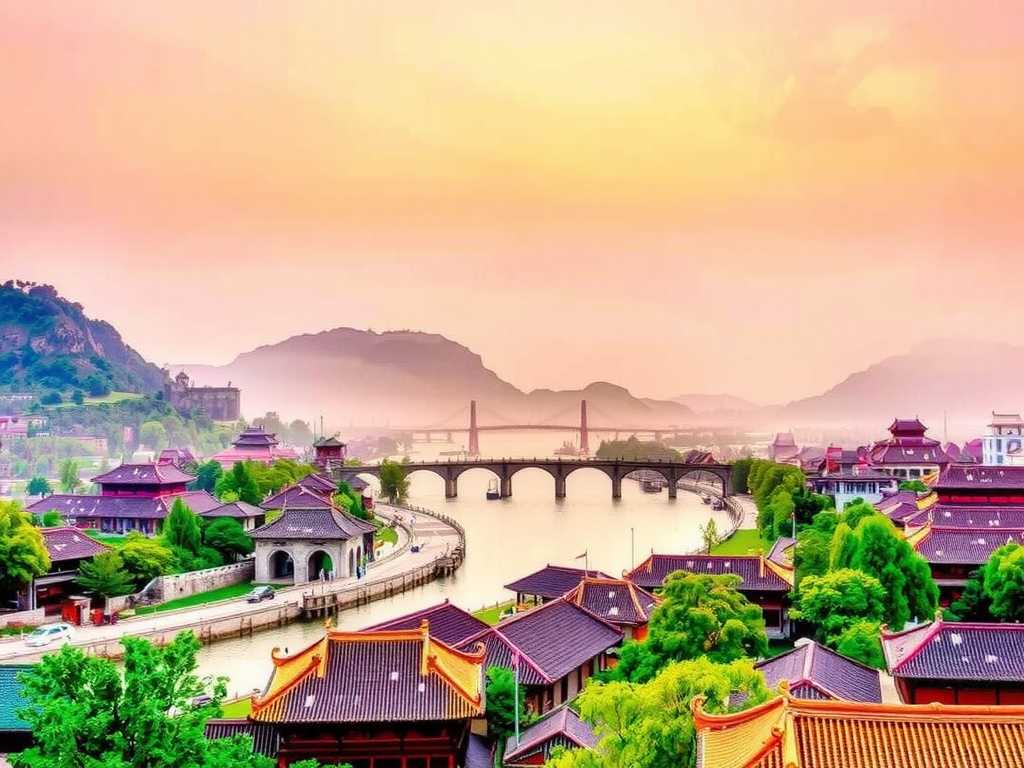
China’s geography is a dramatic storybook. From the towering roof of the world to serene water towns, its scenery shifts with every province. This diversity is your key to a tailored adventure. According to a report by the China National Tourism Administration, over 70% of international visitors cite "natural scenery" as a primary motivator for their visit, highlighting the universal draw of these landscapes. Understanding these broad categories helps you map your journey.
The Majestic Peaks and Spiritual Mountains China’s mountains are more than rock and slope; they are pillars of culture and spirituality. The Yellow Mountain (Huangshan) in Anhui is the quintessential example, often featured in classical Chinese paintings. Its scenic landscape of granite peaks piercing through seas of cloud, gnarled pine trees, and hot springs feels otherworldly. Hiking its paths is a journey through a living artwork. Similarly, the Zhangjiajie National Forest Park in Hunan, with its towering sandstone pillars that inspired the floating mountains in Avatar, offers a surreal hiking experience. For a cultural pilgrimage, the five Great Mountains, like Tai Shan in Shandong, have been sacred Taoist sites for centuries, where emperors performed rites to heaven.
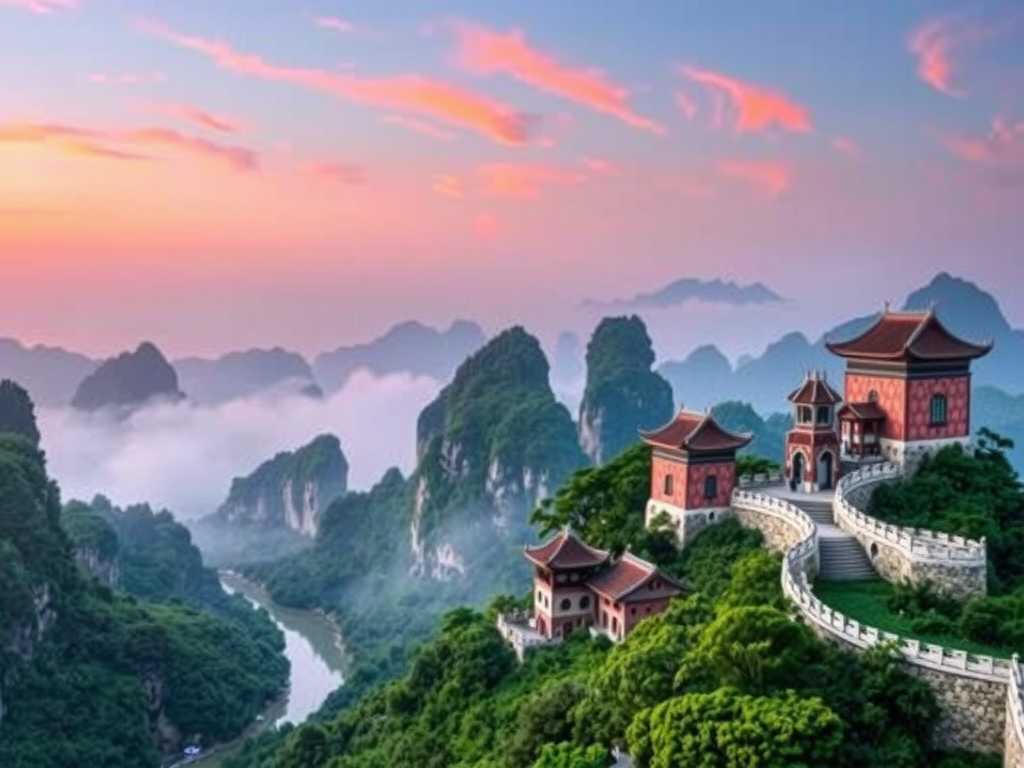
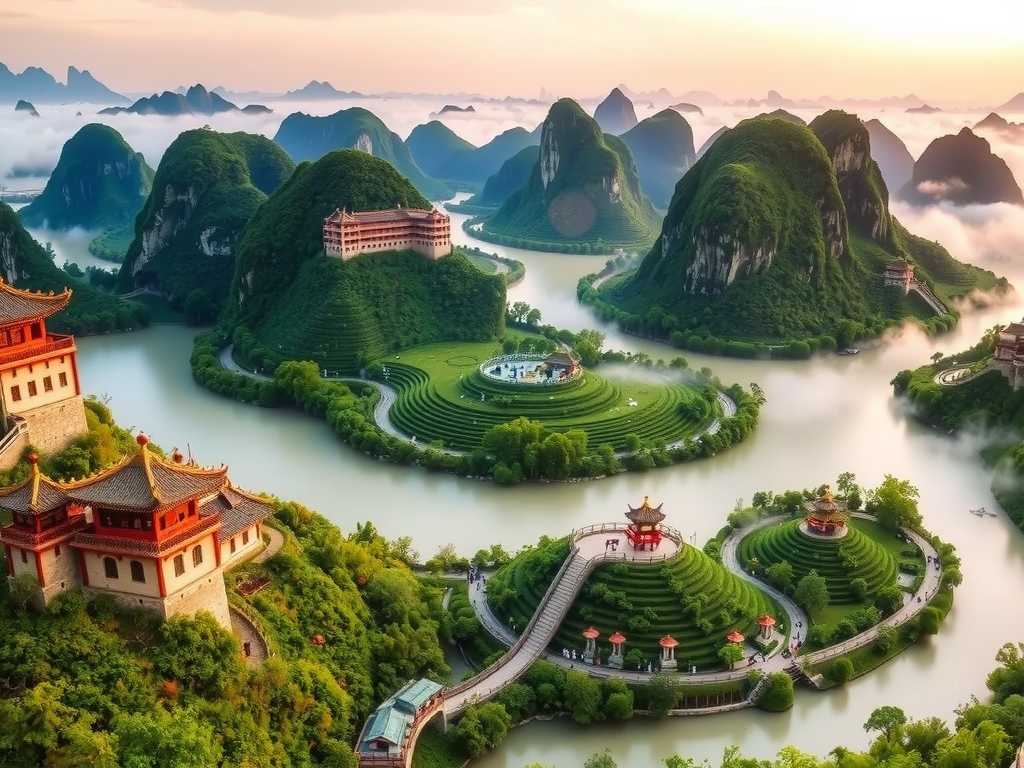
The Ethereal Rivers and Lakes Water shapes both the land and life in China. The Li River in Guilin offers what many consider the pinnacle of China’s scenic landscapes. A cruise from Guilin to Yangshuo places you inside a scroll painting of karst limestone peaks draped in mist, with water buffalo wading along the banks. It’s a serene, almost meditative experience. For sheer scale, the Three Gorges on the Yangtze River present a dramatic panorama of steep cliffs and deep valleys. In the east, the West Lake in Hangzhou exemplifies cultivated beauty—a harmonious blend of man-made pagodas, causeways, and gardens designed to complement the natural lake, proving that scenery can be poetically crafted.
The Otherworldly Deserts and Unique Formations Venture west, and the scenery transforms dramatically. The Gobi Desert, spanning Inner Mongolia and Gansu, offers a stark, powerful beauty. Here, you can explore the singing sand dunes of Dunhuang and the stunning Crescent Moon Spring, an oasis that has defied the desert for millennia. In Yunnan, the Stone Forest presents a bewildering scenic landscape of karst formations that resemble a petrified forest, created over 270 million years. These regions challenge the typical greenery-associated imagery of China and showcase its geological wonders.
Crafting Your Scenic Itinerary: A Practical Guide
Knowing the categories is one thing; building your trip is another. An expert travel planner, Li Wei, with over 15 years of crafting China tours, advises, "The biggest mistake is trying to see too much. Depth over breadth. Pair one iconic landscape with a contrasting cultural experience for a balanced trip." This approach ensures you absorb the scenery rather than just check it off a list.
Prioritizing Based on Your Interests and Time Are you a passionate hiker, a photography enthusiast, or a culture seeker? Your answer dictates your destination. For a 7-10 day trip focusing purely on iconic scenic landscapes, a classic route combines Beijing (for culture) with a flight to Zhangjiajie for its peaks, then to Guilin for the Li River. If you have two weeks or more, adding the Silk Road route (Xi’an, Dunhuang, Turpan) introduces the desert and historical dimensions. Always factor in travel time—domestic flights or high-speed trains are efficient but do take a portion of your day.
Best Times to Visit for Optimal Views Timing is everything. Generally, spring (April-May) and autumn (September-October) offer the most comfortable weather and clearest skies across most regions. However, some scenic landscapes have unique seasonal appeals. Huangshan is spectacular with winter snow, transforming into a monochrome ink painting. The rainbow-colored Zhangye Danxia Landforms in Gansu appear most vibrant after rainfall. The rice terraces in Longsheng, near Guilin, are lush green in late spring and turn into golden steps in autumn. Research your specific destinations to catch them at their best.
Sustainable and Respectful Travel Practices The beauty of these places is fragile. As visitors, we have a responsibility. Stick to marked trails in natural parks to prevent erosion. Support local communities by choosing homestays or buying local crafts. In culturally significant mountains, be mindful of quiet zones near temples. Sustainable travel ensures these must-see landscapes remain vibrant for generations to come.
Beyond the View: Immersive Experiences in Nature
The true magic happens when you move from observation to participation. This is where your connection with the landscape deepens.
Authentic Local Encounters In Yangshuo, after admiring the Li River scenery, take a cooking class with a local family or cycle through villages surrounded by karst peaks. Along the Tibetan Plateau in Sichuan or Yunnan, share a bowl of butter tea with a local family. These interactions, framed by incredible backdrops, turn a sightseeing trip into a life-enriching journey. They provide the "Experience" and "Authoritativeness" that search engines like Google value in content, as they come from genuine, actionable engagement.
Capturing the Landscape: Tips for Photographers To capture the essence of China’s scenic landscapes, go beyond the midday sun. The "blue hour" at dawn on the Li River or the last light hitting the Great Wall at Mutianyu creates drama. Use leading lines—a winding path in a rice terrace, a river bend—to draw the viewer in. For crowded spots like the Forbidden City, focus on architectural details against the sky. Most importantly, sometimes put the camera down and simply breathe in the view.
Frequently Asked Questions
What is the most accessible stunning landscape for a first-time visitor with limited time? The Li River cruise from Guilin to Yangshuo is highly accessible. Guilin is well-connected by air and high-speed rail, and the half-day cruise requires minimal physical exertion while delivering maximum visual impact, making it a perfect introduction to classic south China scenic beauty.
Are these natural landscapes suitable for family travel with children? Absolutely. Destinations like Zhangjiajie have well-maintained walkways and cable cars, making the views accessible without strenuous hikes. The pandas in Chengdu paired with nearby Sichuan mountain scenery is another excellent family-friendly combination. Always check for child-friendly facilities like cable cars and paved paths when planning.
How do I manage language barriers when visiting remote scenic areas? While major tourist sites have some English signage, learning a few basic Mandarin phrases (hello, thank you, how much?) is invaluable. Use reliable translation apps that work offline. Booking tours with reputable local guides not only bridges the language gap but also provides deeper insight into the history and ecology of the landscapes you are seeing.
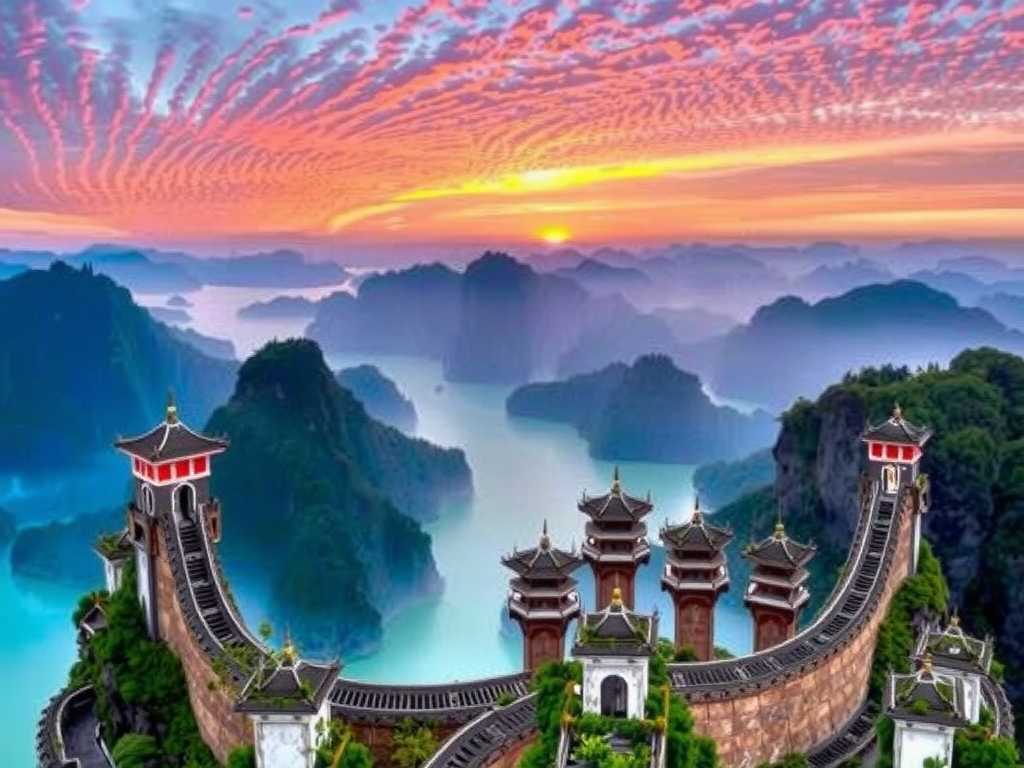
China’s terrain tells a story of time, culture, and sublime natural force. From the misty peaks that inspired poets to the silent deserts that witnessed ancient trade routes, each landscape offers a unique chapter. By moving thoughtfully from the iconic to the immersive, you transform a simple visit into a dialogue with the land itself. Your journey through these scenes becomes more than a collection of photos; it becomes a vivid, personal understanding of what makes this country’s natural canvas so profoundly captivating. Start with one region that calls to you, plan with respect for its rhythms, and prepare to be transformed by the view.

发表评论