 admin
admin Explore China’s Most Famous Tourist Sites: Your Ultimate Travel Guide
Planning a trip to China can feel overwhelming. With a vast territory spanning thousands of years of history and incredibly diverse landscapes, how do you even begin to choose where to go? You want to see the iconic landmarks, but also crave authentic experiences beyond the postcard pictures. This guide is designed to solve that exact problem. We’ll walk you through China’s most famous tourist sites, offering practical insights to help you craft an unforgettable journey that balances must-see wonders with deeper cultural discovery.
Understanding China’s Travel Landscape
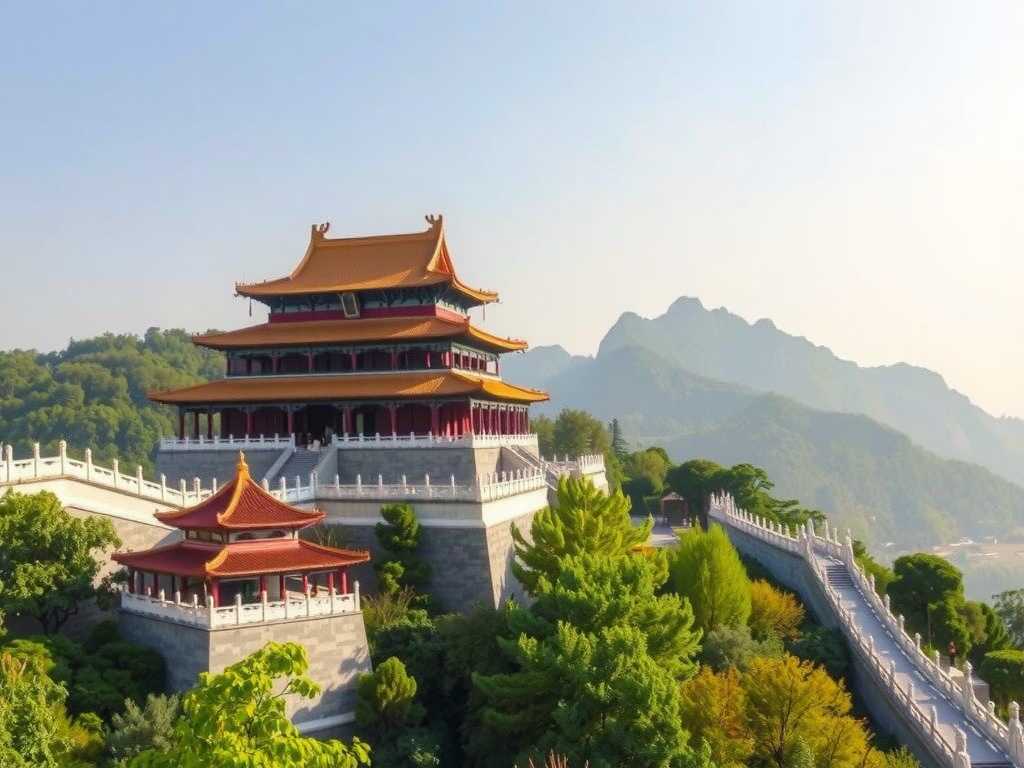
China’s tourism infrastructure has developed rapidly. High-speed trains connect major cities with astonishing efficiency, while domestic flight networks cover even remote regions. According to the China Tourism Academy, domestic tourist trips exceeded 6 billion in 2023, highlighting the country’s immense and vibrant travel culture. For international visitors, this means well-established routes between famous sites, but also the opportunity to venture off the beaten path. The key is strategic planning—grouping destinations geographically and thematically to maximize your time and immersion.
The Iconic Must-Sees: China’s Crown Jewels
No exploration of China’s most famous tourist sites is complete without these legendary locations. They are iconic for a reason, offering profound glimpses into the nation’s soul.
-
The Great Wall of China Stretching over 13,000 miles, the Great Wall is an undeniable symbol of perseverance. Forget the idea of it being a single, continuous line; it’s a series of walls and fortifications. For the best experience, choose your section wisely. The meticulously restored Badaling is easily accessible but crowded. Mutianyu, also restored, offers stunning scenery and a cable car option. For adventurous hikers seeking a wilder, crumbling beauty, Jiankou or Jinshanling are unparalleled. Visiting at sunrise or staying overnight in a nearby village can transform this from a crowded checkpoint into a personal, awe-inspiring encounter.
-
The Terracotta Army in Xi’an Discovered by farmers in 1974, this subterranean army of over 8,000 life-sized soldiers, horses, and chariots guards the tomb of China’s first emperor, Qin Shi Huang. Standing before Pit 1, the largest excavation, is a breathtaking moment that connects you directly to 220 BC. To enhance your visit, consider hiring a local guide at the site. Their expertise will bring the details—the unique facial expressions, the ancient weapons, the ongoing archaeological work—to life in a way that placards alone cannot.
-
The Forbidden City in Beijing For 500 years, this was the exclusive celestial domain of Ming and Qing emperors. With nearly 1,000 buildings and 8,700 rooms, it’s the world’s largest palace complex. Navigating it requires a plan. Focus on the central axis: the Meridian Gate, the Hall of Supreme Harmony, the Palace of Heavenly Purity, and the Imperial Garden. Then, explore quieter exhibitions in the eastern and western wings. As noted by historian Jonathan Spence, the Forbidden City’s design is a physical manifestation of cosmic order and imperial power—a concept you can feel in its meticulous symmetry and imposing scale.
Beyond the Classics: Regional Wonders and Cultural Gems
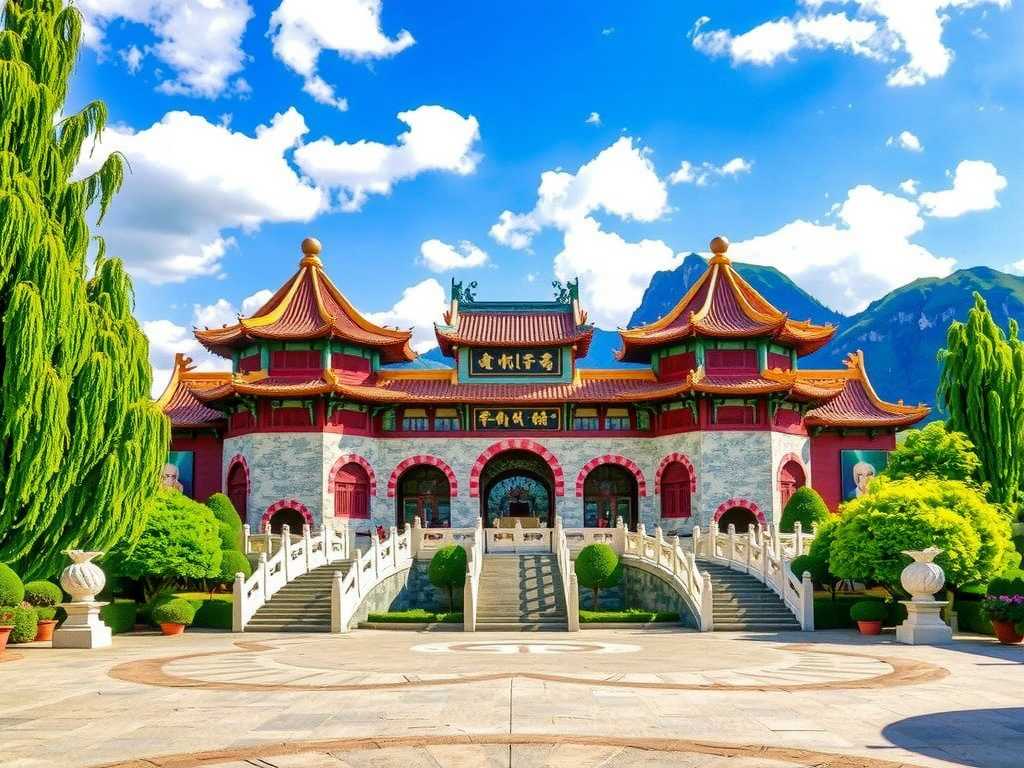
While the sites above are non-negotiable for first-timers, China’s depth is revealed in its regional diversity. These famous tourist sites offer contrasting experiences.
-
The Li River & Karst Peaks of Guilin The landscape of Guilin and Yangshuo is the inspiration for classical Chinese painting. A Li River cruise from Guilin to Yangshuo is the classic way to witness the dreamlike karst mountains rising from the water. For a more active immersion, rent a bicycle and ride through the Yulong River valley, crossing ancient stone bridges and weaving through rice paddies with those iconic peaks as your constant backdrop.
-
The Potala Palace in Lhasa Soaring over the city of Lhasa, the Potala Palace is the heart of Tibetan Buddhism and a UNESCO World Heritage site of staggering spiritual and architectural significance. The climb up its many steps is a pilgrimage in itself. Inside, the intricate murals, golden stupas, and meditation halls of generations of Dalai Lamas create an atmosphere of deep devotion. Visiting requires careful planning due to travel permits and altitude acclimatization, but the reward is an experience utterly different from eastern China’s metropolises.
-
The Modern Skylines of Shanghai and Hong Kong China’s famous tourist sites aren’t all ancient. The futuristic skylines of Shanghai’s Pudong district and Hong Kong’s Victoria Harbour represent the nation’s dramatic present and future. In Shanghai, walk the historic Bund, then cross the river to ascend the Shanghai Tower or the Oriental Pearl TV Tower for panoramic views. In Hong Kong, the Symphony of Lights show and a Victoria Peak tram ride offer iconic perspectives of one of the world’s most dynamic cities.
Practical Tips for Planning Your Journey
To seamlessly explore these famous sites, a few practical steps are essential. First, time your visit wisely. Spring (April-May) and autumn (September-October) generally offer the most pleasant weather nationwide. Major sites will be busy during Chinese public holidays like Golden Week. Second, master basic transport. Book high-speed train tickets in advance via apps like Trip.com. For flights between regions, compare prices on local carriers. Third, embrace local tools. Download Didi (the ride-hailing app), a VPN if you need access to Western social media, and WeChat Pay/Alipay for seamless cashless transactions. Finally, learn a few phrases. Simple Mandarin greetings like “nǐ hǎo” (hello) and “xiè xie” (thank you) go a long way in fostering positive interactions.
How many days do I need for a first trip to China? A minimum of 10-14 days is recommended to cover the essential golden triangle of Beijing (Great Wall, Forbidden City), Xi’an (Terracotta Army), and Shanghai, without feeling rushed. Adding a fourth destination like Guilin or Chengdu would comfortably require two to three weeks.
What is the best way to travel between these famous sites? China’s high-speed rail network is the best way to travel between major cities like Beijing, Xi’an, and Shanghai. It is fast, punctual, comfortable, and often connects directly with city metro systems. For longer distances, such as Beijing to Lhasa or Shanghai to Guilin, domestic flights are the most time-efficient option.
Is it difficult to travel independently in China given the language barrier? While a challenge, independent travel is entirely feasible. Translation apps like Pleco or Google Translate (with camera function) are invaluable. Major tourist sites have clear signage in English, and metro systems in big cities are bilingual. Booking hotels and transport through international platforms is straightforward. Patience, a good map app, and a willingness to gesture will see you through most situations.
Exploring China’s most famous tourist sites is more than a checklist of landmarks; it’s a journey through layers of time, from ancient empires to cutting-edge modernity. By combining the iconic with the regional, planning with practicality, and approaching each destination with curiosity, you move beyond simple sightseeing. You begin to piece together the immense puzzle of Chinese civilization, creating a travel narrative filled with wonder, insight, and memories that extend far beyond the camera lens. Your adventure into the heart of one of the world’s most fascinating cultures awaits.


发表评论