 admin
admin China’s Scenic & Cultural Travel Guide: Unlock the Soul of an Ancient Civilization
Planning a trip to China can feel overwhelming. With a landmass rivaling a continent and a history spanning millennia, where do you even begin? Many travelers struggle to move beyond the well-trodden path of a few major cities, missing the profound depth of China’s scenic beauty and living cultural heritage. This comprehensive China’s Scenic & Cultural Travel Guide is designed to solve that exact problem. We’ll move past simple checklists and dive into a curated journey that connects majestic landscapes with the timeless traditions that shaped them, offering you a transformative travel experience.
Understanding China’s Travel DNA: Scenery and Culture Intertwined
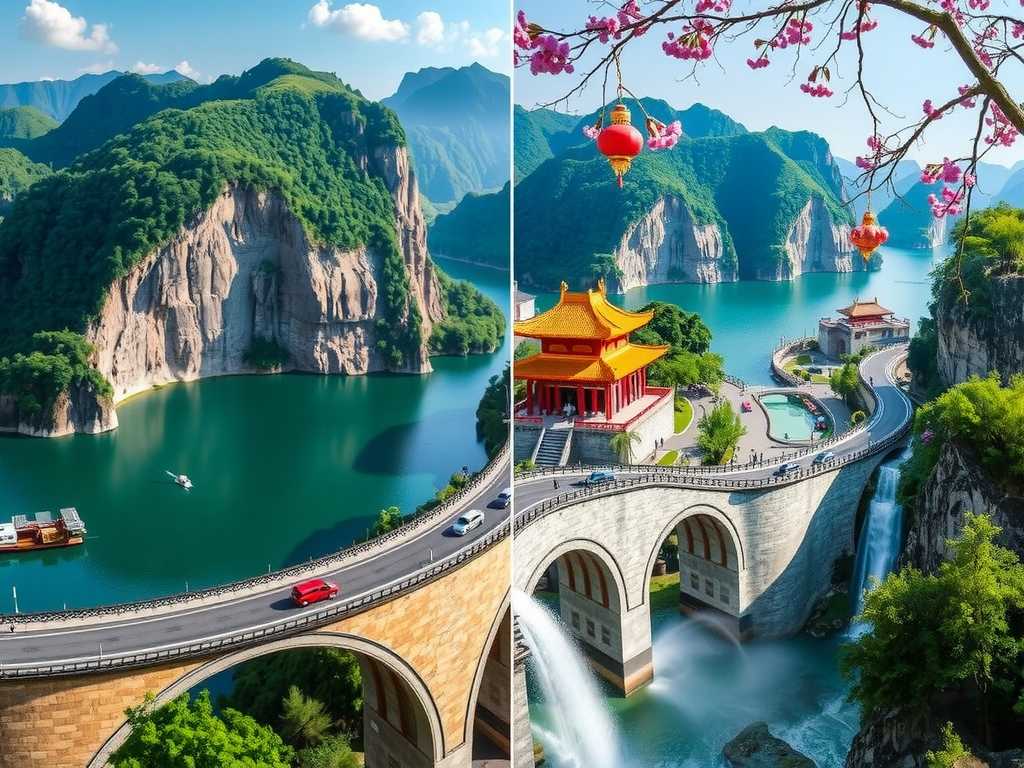
To truly appreciate China, one must understand that its landscapes and culture are not separate entities but a continuous dialogue. For thousands of years, poets, painters, and philosophers have drawn inspiration from mountains, rivers, and forests, embedding them with spiritual and philosophical meaning. This isn’t just sightseeing; it’s about reading the stories written in the land itself.
Section 1: The Iconic Landscapes – More Than a Postcard
These are the places that define China’s geographical imagination, each offering a unique window into the nation’s soul.
The Great Wall: A Stone Dragon Across Mountains The Great Wall is the ultimate symbol of perseverance. To avoid the crowds, skip Badaling. Instead, consider the Jiankou to Mutianyu hike. This moderately challenging trek offers raw, crumbling watchtowers (Jiankou) leading to a beautifully restored section (Mutianyu). You’ll walk along ridges with panoramic views, physically tracing a line of history. The best times are early spring or autumn, when the rolling hills are painted with wildflowers or fiery foliage.
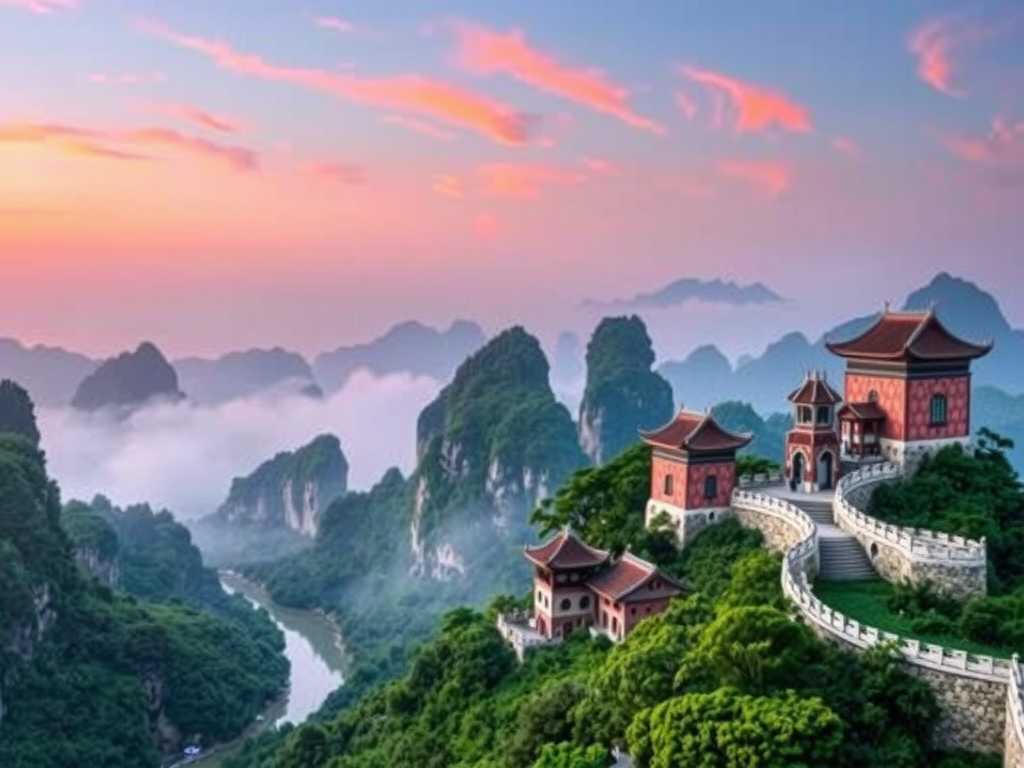
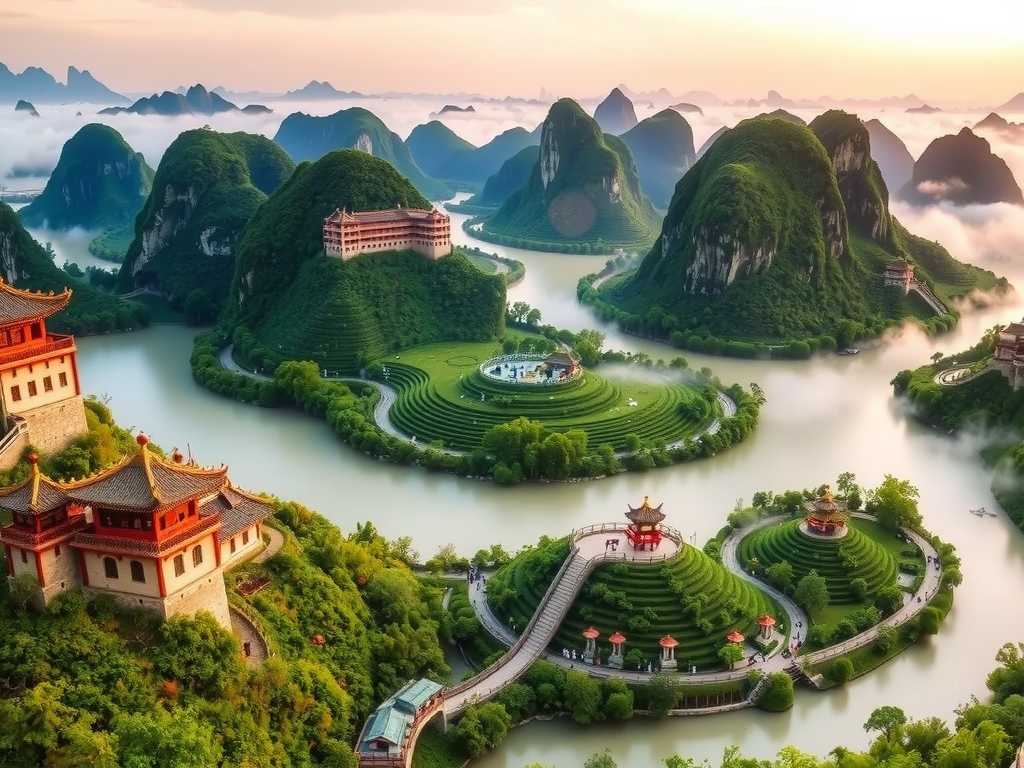
The Li River & Karst Peaks: A Painting Come to Life The surreal karst landscape of Guilin and Yangshuo is the classic Chinese scroll painting made real. A Li River cruise from Guilin to Yangshuo is the quintessential experience. For a more intimate encounter, rent a bicycle and explore the countryside paths near Yangshuo, where water buffalo graze and limestone peaks erupt from rice paddies. As noted by cultural historian Dr. Mei Lin, “This landscape didn’t just inspire art; it became the standard for all classical Chinese landscape painting, representing harmony between man and nature.”
The Yellow Mountains (Huangshan): Mist, Pines, and Granite Peaks Huangshan is the epitome of ethereal beauty. Its granite peaks, often shrouded in mist and adorned with uniquely shaped pine trees, have been a pilgrimage site for artists and seekers for centuries. Stay overnight at a summit hotel to witness both the spectacular sunset and sunrise. The West Sea Grand Canyon trail provides a more strenuous and less crowded route into the heart of this mystical terrain.
Section 2: Living Culture and Ancient Capitals
China’s culture is not locked in museums; it thrives in ancient city lanes, village rituals, and local kitchens.
Xi’an: Where the Silk Road Begins As the eastern terminus of the Silk Road and home to the Terracotta Army, Xi’an’s history is palpable. Beyond the silent warriors, walk or bike the intact City Walls at dusk. Dive into the Muslim Quarter after dark, a bustling enclave where the air is thick with the scent of cumin and roasting meat, a delicious testament to centuries of cultural exchange.
Pingyao: A Ming-Qing Dynasty Time Capsule Step into a living Ming and Qing dynasty blueprint in Pingyao Ancient City. This UNESCO site is remarkably preserved, with imposing city walls, courtyard homes (siheyuan), and historic merchant exchange houses. Stay in a traditional guesthouse, and observe (or even try) local crafts like lacquerware. It’s a slower, more contemplative look at China’s architectural and commercial past.
Lijiang & Shangri-La: The Tibetan Frontier in Yunnan In Yunnan province, the ancient town of Lijiang, with its Naxi minority culture and canals, offers a distinct flavor. Use it as a gateway to Zhongdian (renamed Shangri-La), a Tibetan cultural center. Here, you can visit the Songzanlin Monastery, a sprawling Tibetan Buddhist complex, and experience the stark, high-altitude beauty of the Himalayas. It shatters the monolithic view of Chinese culture, showcasing its incredible ethnic diversity.
Section 3: Strategic Planning for a Deeper Journey
To seamlessly integrate scenery and culture, your approach to planning is key.
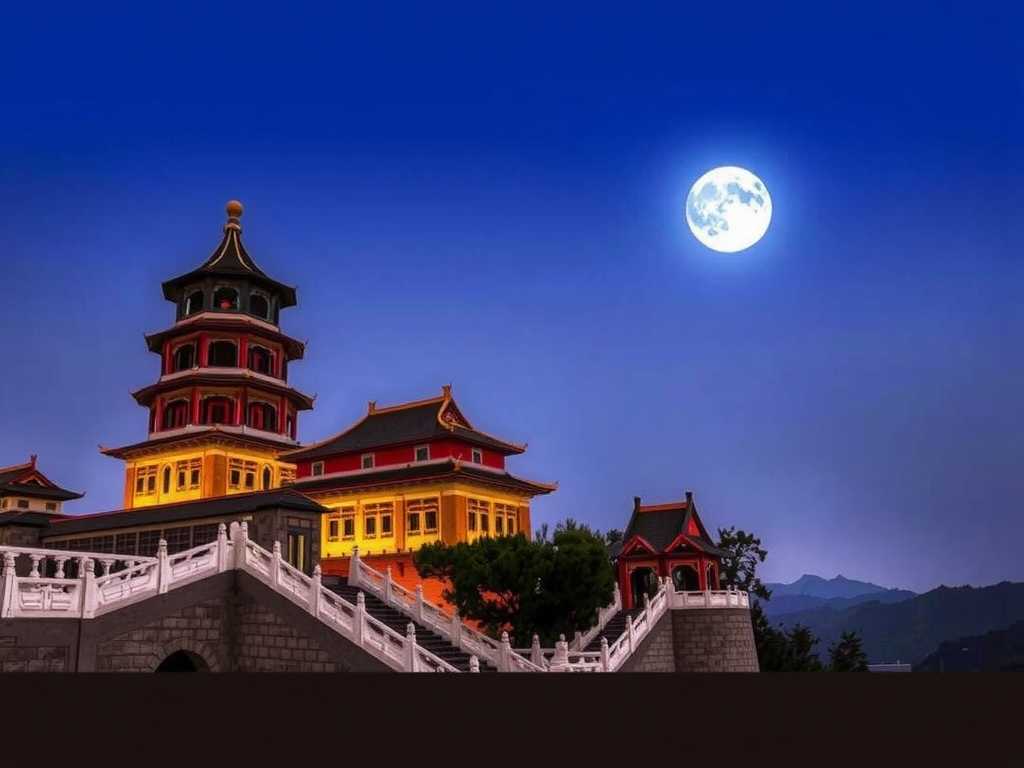
Timing Your Visit with Festivals Align your trip with a major festival for an unforgettable cultural immersion. Chinese New Year (Spring Festival) offers explosive energy, family rituals, and decorations everywhere, though travel is extremely busy. The Mid-Autumn Festival provides a more poetic atmosphere, with mooncakes and lantern displays. For natural beauty, early October often delivers clear skies and autumn colors, a perfect window according to annual travel industry climate reports.
Transportation: Navigating the Vast Terrain China’s high-speed rail network is a marvel of efficiency and the best way to cover long distances between hubs like Beijing, Xi’an, and Shanghai. For remote scenic areas like Jiuzhaigou Valley or Zhangjiajie National Forest Park, domestic flights are necessary. Within cities, ride-hailing apps like Didi are indispensable.
Cultural Etiquette and Connection A few small efforts go a long way. Learn basic Mandarin phrases like nǐ hǎo (hello) and xiè xie (thank you). When visiting temples or minority regions, dress and act modestly. Always receive business cards or gifts with both hands as a sign of respect. Embracing the local dining style, sharing dishes communally, is a direct path to cultural connection.
Common Questions from Travelers
Is it difficult to travel independently in China without speaking Chinese? While challenging, it’s entirely feasible with preparation. Translation apps like Pleco or Google Translate (with a VPN) are essential. Major tourist centers have English signs, and metro systems in big cities have clear English maps. Booking trains and hotels through international travel apps simplifies the process significantly.
What is the best way to handle payments, as cash is no longer king? Mobile payments (WeChat Pay and Alipay) dominate. For foreign visitors, linking an international credit card to these apps is now possible and highly recommended. Still, carry some cash (RMB) for small vendors in rural markets or scenic spots where digital infrastructure may be limited.
How can I ensure my visit is respectful and sustainable? Choose homestays or family-run guesthouses in ancient towns. Support local artisans by purchasing directly from them. Always follow designated paths in scenic areas to protect fragile ecosystems. Be mindful when photographing locals, especially in minority regions—always ask for permission first.
China offers a journey that engages all the senses and challenges perceptions. It’s about standing on the Great Wall feeling the wind that once cooled sentries, tasting flavors in a Xi’an market that traveled the Silk Road, and witnessing dawn over Huangshan just as ancient poets did. This guide is your starting point for moving beyond the itinerary to create a personal, profound dialogue with one of the world’s most enduring civilizations. Your adventure into the heart of China’s scenic and cultural tapestry awaits.

发表评论